
Co-Design: Shaping Streets Together
What if street design wasn’t done FOR people, but WITH them?
Co-design is a hands-on approach where residents, planners, and city teams collaborate to create streets that work for everyone. Instead of top-down decisions, people shape the spaces they actually use.
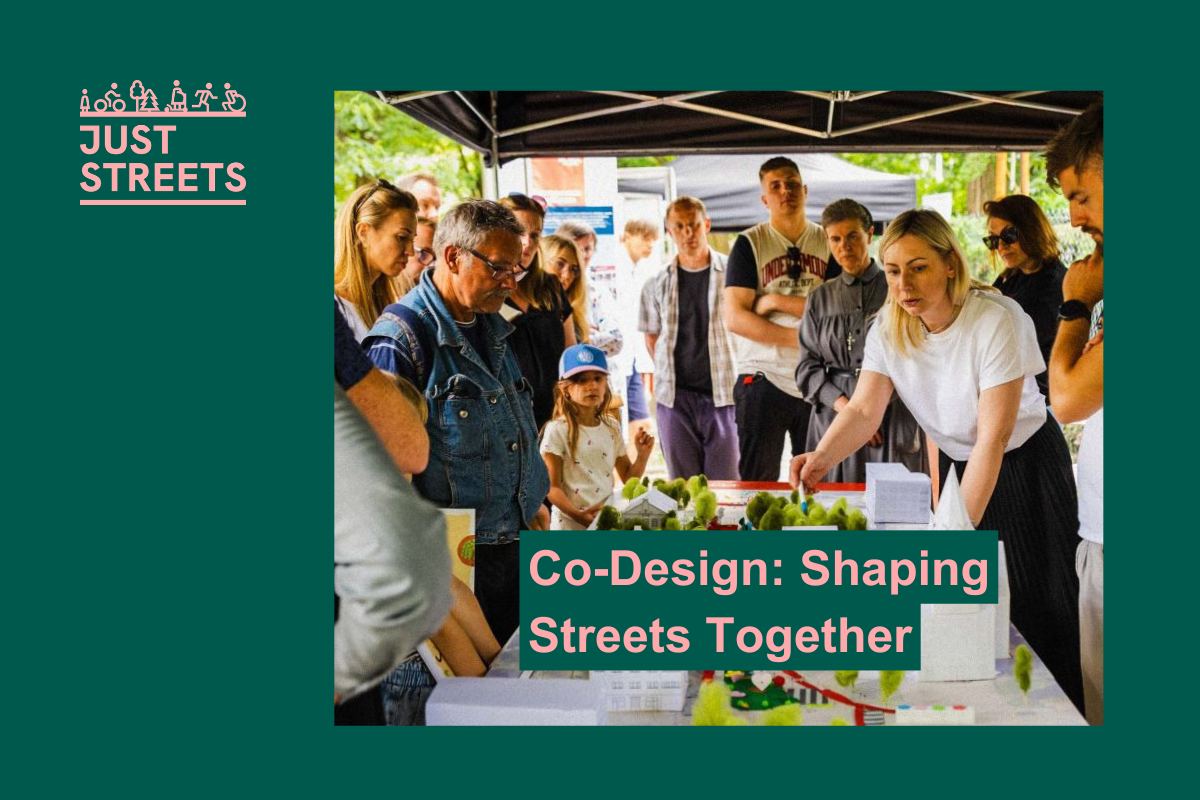
How Co-Design Works
Through workshops, street audits, and participatory budgeting, communities turn ideas into real changes - from safer crossings to greener sidewalks and better play areas. Residents test, refine, and help implement solutions at every step.
Here are a few examples of co-design from our Pilot Cities:
In Riga, co-design is being applied through the development of a pilot intersection, including concrete design elements and ongoing work on asphalt art and inclusive urban furniture with the community.
In Cugir, citizens have taken part in participatory budgeting to decide where and how many bike racks are needed, focusing on safety, usability, and local identity.
Co-design is creative, collaborative, and rooted in shared experience.
Key Ideas You Can Use
Collaborative design between residents, planners, and city teams
Street audits based on lived experience
Participatory budgeting for local decision-making
Iterative testing and refinement of interventions.
Co-Design: Examples & References
Explore these and more examples in a short visual guide available for download.
For more examples and practical approaches, download the full Actionable Framework for street justice. The report is part of the Justice Toolkit developed by our research partners: University of Westminster, Universiteit van Amsterdam, Universidade do Porto, Fondazione LINKS, and Western Norway University of Applied Sciences.