
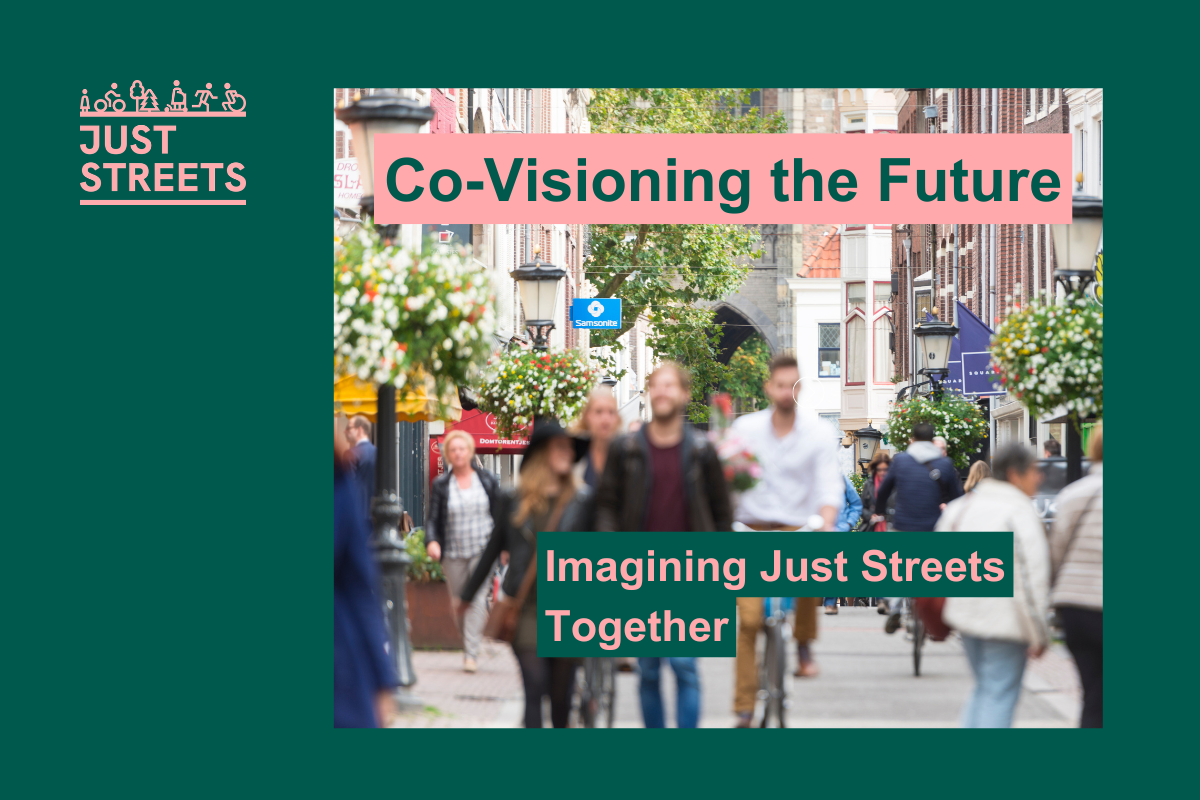
Co-Visioning the Future: Imagining Just Streets Together
Co-visioning creates space for residents, planners, and local voices to imagine their ideal streets together. Through drawings, stories, and creative workshops, participants explore ideas and possibilities for their streets. Co-visioning helps identify shared values and priorities that can inform planning and design decisions.
Key Ideas & Practices
Co-visioning shifts the starting point of planning
Instead of presenting residents with technical proposals to react to, co-visioning invites them to articulate their aspirations first. This reframes the conversation from "what do you think of our plan?" to "what kind of street would you like to see?"
Creative methods unlock different voices
Drawing, mapping, storytelling, and visual exercises help participants express ideas that may be difficult to put into words. These methods can be particularly valuable for engaging children, people with language barriers, and those less comfortable in formal consultation settings.
Exploring multiple futures reveals shared values
Rather than seeking consensus on a single vision, cities can present different scenarios and explore the underlying values and priorities. This process can provide insight into what matters most to communities — such as safety, greenery, accessibility, or community connection — which can guide design decisions.
Co-visioning can support engagement and ownership
When participants see their ideas reflected in planning discussions, it may increase awareness and engagement with proposed changes. In addition, it fosters greater acceptance of divergent ideas, as participants gain insight into other people’s perspectives and reasoning.
Explore these key ideas and practices in a short visual guide.
Co-visioning: Examples & References
Bristol: Workshops as part of the city’s high streets recovery programme invited residents and business owners to explore future possibilities for public space.
Bristol City Centre and High Streets Recovery
Rotterdam: Participatory design exercises engaged residents in envisioning the inner city and public spaces.
Rotterdam: Creating a City Lounge for All
Helsinki: The Summer Streets programme included public engagement activities to explore temporary street transformations.
For additional examples of inclusive future visioning practices globally, see Tomorrow's Cities – Future Visioning.
For practical approaches to co-visioning and other co-creation phases, download the full Actionable Framework for street justice.
The report is part of the Justice Toolkit developed by our research partners: University of Westminster, Universiteit van Amsterdam, Universidade do Porto, Fondazione LINKS, and Western Norway University of Applied Sciences.