
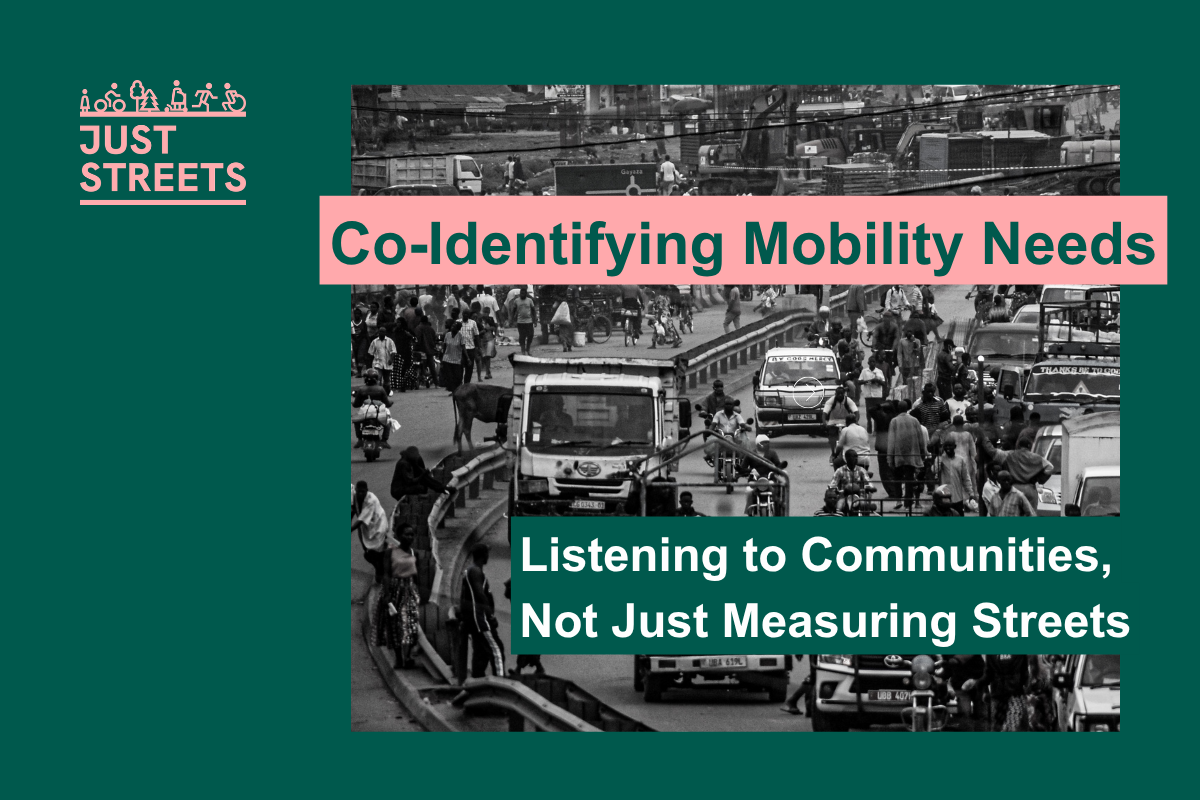
Co-Identifying Mobility Needs: Listening to Communities, Not Just Measuring Streets
How can cities understand what really matters to the people who use streets every day?
Good urban planning starts with understanding lived experiences - not only traffic counts, design standards, or spatial data. The best urban planning starts with listening.
Everyday mobility is shaped by routines, constraints, and small, repeated interactions with the street: crossing a road, navigating uneven pavements, finding a place to rest, or feeling safe while moving through a neighbourhood. Co-identifying needs means working with residents to surface these realities and letting them guide decisions.
Key ideas & practices
Cities can co-identify everyday mobility needs by creating spaces for people to share their experiences directly, in context, and on their own terms:
Walking audits allow residents to move through their neighbourhoods together and highlight daily challenges such as unsafe crossings, poor accessibility, and missing facilities.
Community sessions create opportunities for shared reflection on how streets are experienced across different ages, abilities, and routines.
Collaborative mapping helps ensure that underserved areas and lived realities — not only formal datasets — guide planning decisions.
Street ambassadors bring planning conversations directly to people, gathering diverse input while building trust and long-term relationships.
Together, these practices shift the focus from abstract measurements to how streets actually function in everyday life.
Explore these key ideas and practices in a short visual guide.
Practical examples
Examples of co-identifying needs in action include walking audits in Dublin and participatory mapping workshops in Barcelona.
For more examples and practical approaches, download the full Actionable Framework for street justice.
The report is part of the Justice Toolkit developed by our research partners: University of Westminster, Universiteit van Amsterdam, Universidade do Porto, Fondazione LINKS, and Western Norway University of Applied Sciences.