
The cities involved in the JUST STREETS project are tackling a wide variety of challenges with their interventions. What all these very different projects have in common is their focus on the needs of marginalized groups to create better streets for the benefit of all citizens.
Follower cities engage with these experiences to explore how approaches can be adapted and applied in their own contexts.
Amsterdam
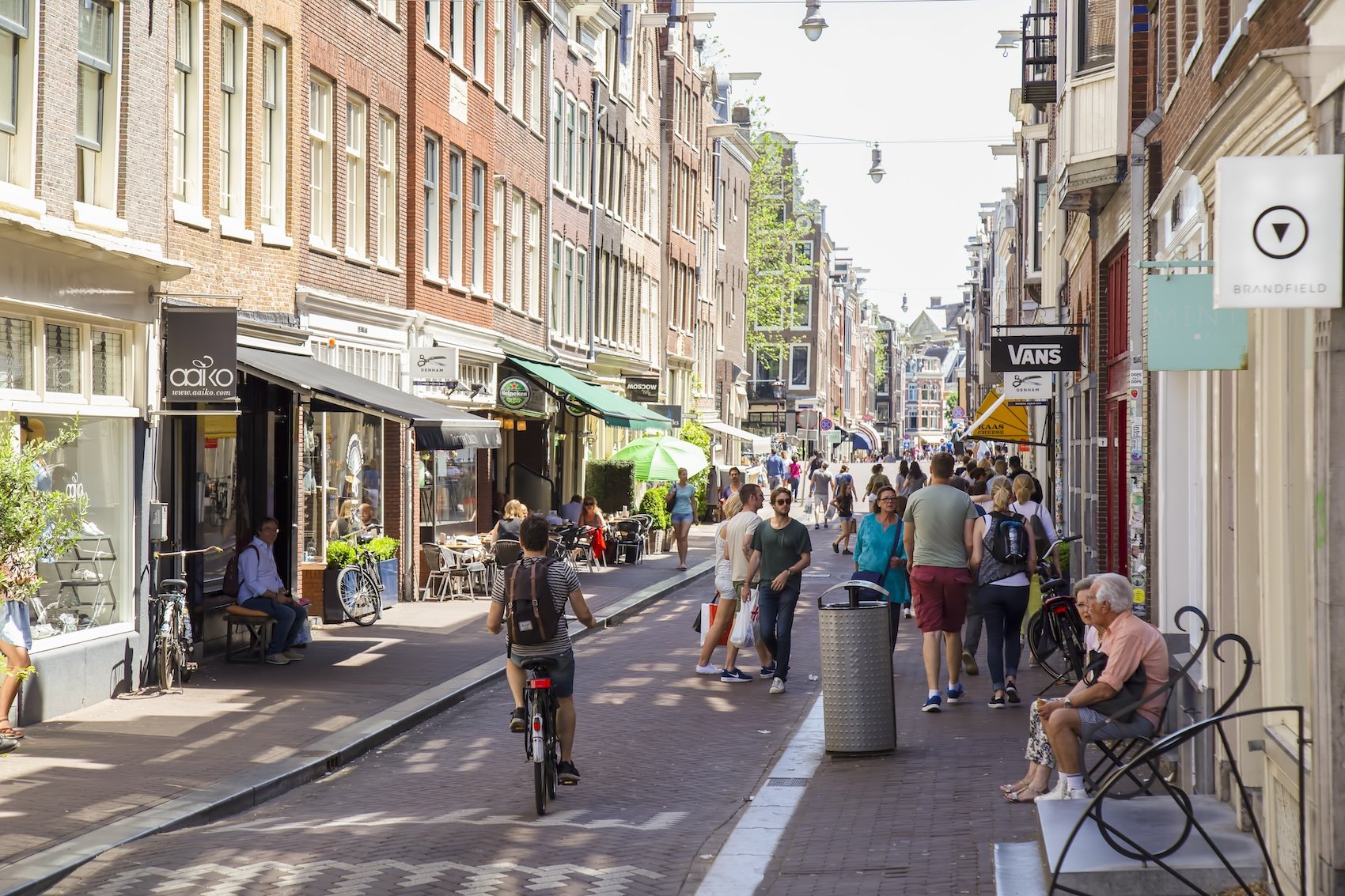
Public participation in creating valuable neighbourhoods is an important part of Dutch culture which has always been giving high priority to ensuring that children can move safely on its streets.
Faced with more than 600 road infrastructure projects per year, Amsterdam is increasingly experimenting with setups for more efficient co-creation processes with its citizens.
-
More than 600 street refurbishment projects are undertaken by the City of Amsterdam every year, but only a small fraction involve participatory activities with citizens. This constitutes many missed opportunities to co-create for nicer neighbourhoods and more active mobility. To substantially increase this number, the city is experimenting with new co-creation approaches. Several of them will be tested as part of the JUST STREETS project.
-
Amsterdam wants to find new ways for its public participation efforts that will ultimately allow them to grow the involvement of citizens and substantially increase the number of participatory projects while keeping its co-creation budgets steady.
-
While public participation in the Netherlands has a long tradition for urban development and many neighbourhood projects, certain citizen groups are still underrepresented in such activities. Within JUST STREETS we will be experimenting with approaches to specifically target these underrepresented communities.
Braga
The Portuguese city has been experiencing rapid growth since the 1980s. This development has been accompanied by an above-average increase in private car use and road construction, leading to severe air quality as well as road safety challenges.
In the past years, Braga has started to introduce measures to counteract this development which ultimately led to winning the 2022 European Mobility Week Prize as a frontrunner in mobility transformation.

-
The JUST STREETS intervention aims at changing peoples’ mind-sets concerning mobility and the fair distribution of public space. Focused on the super-block neighbourhood of Braga’s André Soares School it will be local “pioneers” who get the process started and act as multipliers to grow the number of residents and stakeholders involved. With the methodology of a Transition Arena, ideas developed in co-creation processes by a temporary group of change agents will be converted into quick interventions and hopefully long-term solutions. The group will summarize the problem in a street, create visionary images, and formulate a list of actions and experiments for implementation.
-
Key goal of the intervention is to create safer and healthier conditions for children to move independently in the immediate vicinity of their school. With the help of a group of pioneers, more and more stakeholders are to be involved in collaboratively working on a vision: an improved distribution of road space to meet the needs of all groups of people. Ultimately it should be the ideas from the people which are implemented, allowing a more human oriented design of Braga’s public space.
-
As a result from a previous project with the André Soares School, there are already several local pioneers in the neighbourhood. The intervention will effectively add more residents, local businesspeople, as well as commuters to the group making an impact.
Cugir
The small Romanian town of Cugir is facing severe road safety challenges due to the already strong and still increasing use of private cars. Perfectly laid out for benefiting from the 15-Minute-City concept, the city will tackle current mobility mindsets of its citizens to improve public spaces and nudge citizens towards the use of sustainable modes of mobility.

-
Cugir wants to change citizen awareness towards the use of active mobility choices by means of attractive public spaces and more social interactions on streets, squares and places of daily life. As part of the JUST STREETS intervention an expert facilitator is hired to ignite a spirit of public participation for decisions aimed at public spaces and mobility. One specific project is the extension of an existing cycling path, linking it to schools and stablishing school streets during peak hours to enable safe cycling for all school children. Another intervention involves the upgrade of a municipal park into an intergenerational meeting space and educational bicycle park.
-
Cugir aims at nudging a positive attitude towards sustainable modes of mobility to transform current mobility patterns. It wants to engage citizens and a broad range of stakeholders in a broad range of co-creation opportunities – not only to (re)develop existing public spaces, but also to develop more public responsibility for them. While the project will emphasize cycling and walking as mobility alternatives, it is hoped that the collaborative efforts will strengthen the trust for collaboration between citizens and the public administration.
-
With the main goals of (re)developing public spaces and creating stronger public identification and care for those places, the project will engage with a broad variety of stakeholders. However, it will be critical to get those involved who are most likely to use the spaces, which includes local residents, businesses and their patrons.
Cugir - From Empty Lanes to Shared Space
Kozani
The Greek city of Kozani has been registering a strong surge in traffic congestion from cars, increasingly affecting the safety and health of pedestrians and users of active mobility in its often narrow streets.
To address this, Kozani wants to introduce so-called “buffer zones” around 4-5 primary schools. The learnings are set for implementation around other schools and will be integrated into the city’s SUMP to achieve traffic calming.

-
Kozani will be planning and implementing buffer zones around 6 centrally located primary schools – an urgent issue that’s also part of their SUMP. Together with children, parents, teachers, as well as residents and local businesses, each school will be pursuing an individual approach to participation, engagement, co-creation, and implementation. Additionally, a cycle-path is planned to link the schools to residential areas and points-of-interest in a safe way.
-
It is precisely the different approaches during the process of implementing these buffer zones that will constitute a critical learning for the city and its school authority. While Kozani will transform street space around 6 schools it will be especially through constant monitoring and evaluation that the city aims to identify the most successful elements to tailor-make approaches for smoother and faster implementation around its other schools.
-
The JUST STREET intervention will be addressing groups that are traditionally at risk when using non-car mobility in the urban environment (especially children, women and handicapped citizens) but also the school communities, residents, police, and local businesses. These groups will be actively involved in the co-creation processes.
London Westminster
The area of London Westminster prioritises safe and accessible streets for everyone.
With thousands of urban development projects undertaken each year, London is progressively exploring innovative approaches to strengthen co-creation efforts with its residents. This collaborative approach aims to ensure that the city’s diverse communities have a voice in building a more inclusive, sustainable urban environment.

-
In London, 3 street-level solutions will be implemented. London Borough of Lambeth will install a new School Street to foster a safer and more pleasant environment outside a primary school, thus prioritising children while reducing road danger and improving air quality. Harley Street Business Improvement District will promote the use of streets for all, with specific attention paid to vulnerable users. The BID will introduce seating and planting close to local medical facilities and other businesses to allow for improved wayfinding and more rest areas. Camden Town Unlimited BID will create connected and strategically located walking routes considering local cultural influences.
-
London wants to involve multiple users in the design of these activities – with a focus on vulnerable groups. The interventions will have long-term benefits for Londoners, contributing to safer, more accessible streets as the city’s population grows.
-
London will engage with different groups of people, including vulnerable groups. Within JUST STREETS, we will experiment with approaches to engaging these underrepresented communities to give them a voice and a real opportunity to change things.
Milan
With 3.2 million inhabitants living in 133 municipalities, the Metropolitan City of Milano is rethinking its mobility approach. The greater share of active mobility during the pandemic has rapidly created road safety-issues between cyclists, pedestrians and car drivers.
To tackle this challenge, Milan is currently building an extensive network of cycling routes, radial from and circular around the city centre.

-
In the municipality of Corsico with 35.000 inhabitants, public transport interchange modes will be improved. Focus region will be around the train station, the Via Alzaia Trento and the adjacent green spaces. Improved and safer space will be given to cyclists and pedestrians, while green areas will be enhanced. The possibility of a broader urban regeneration intervention that may include a new traffic circulation model will be studied and verified. In addition, the project will focus on training and information campaigns for residents.
-
The project aims to combine safer and more attractive street options with better informed commuters and area users in order to improve the mobility hub’s reachability and usability by bike or on foot. Knowledge transfer about available public transport options will be a focus. In addition, the project will be cooperating with local industries about large scale and more sustainable alternatives to the current road-focused cargo transport, which currently dominates local traffic.
-
Being part of the greater Metropolitan Area, one of the project’s key stakeholders will be the local municipality in which the project should be realized, including its key decision-makers. Other primary stakeholders include the prospective users of the mobility hub. Adjacent factories will play a crucial role, as heavy transport vehicles currently dominate the spatially clearly limited route along the canal.
Riga
The Latvian capital of Riga offers diverse mobility options to enhance urban life. It promotes walking and cycling, aiming to reduce traffic congestion and improve environmental quality. The city's mobility vision focuses on creating a vibrant, accessible, and liveable urban environment.
The "Riga Sustainable Development Strategy" emphasizes a "people-first" approach by prioritizing active mobility at the top of the mobility hierarchy.

-
The JUST STREET pilot will be making a key intersection area in the Agenskalns neighbourhood safer and more accessible to all citizens. One of the most important parts of the interventions will be removing car parking spaces, effectively creating new public space. It will be used not only to improve the physical environment but also to strengthen social ties, ensuring that the lively area with its cafes, restaurants, a university, a school, and a church is welcoming and accessible to all. Vibrant pavement coloring will indicate safe pedestrian space, new bike lanes and installing bike stands will promote cycling, while improving new public space with benches, greenery, and parklets will encourage social interaction.
-
By using tactical urbanism interventions (low-tech, low-cost, quick solutions) and introducing extensive public engagement opportunities, the project aims at improving walkability and safety in the site while strengthening for residents and users a sense of community and ownership of the place. While specialized analysis by the city’s technical partner HVL will help identify key areas for intervention to maximize tactical urbanism impact, a "Tactical urbanism toolkit" will be a direct result of the project. It will be designed to help enhance street safety beyond the pilot site throughout the entire city.
-
The project engages a diverse range of stakeholders, including educational institutions, associations, NGOs and entrepreneurs. The project prioritizes the needs of all citizens, especially vulnerable groups such as seniors, individuals with disabilities, children, and women. By fostering collaboration and co-creation among these diverse groups, we aim to create an inclusive and supportive community that addresses the unique challenges and opportunities faced by each stakeholder.
Vilnius
The capital of Lithuania is a rapidly growing city that prides itself with constantly improving urban infrastructure. By 2030, Vilnius aims to make a significant shift in its mobility, achieving its sustainable progressive urban transport strategy goals.
Emphasizing co-design and community engagement, Vilnius is fostering a culture where residents actively participate in shaping their urban environment.
-
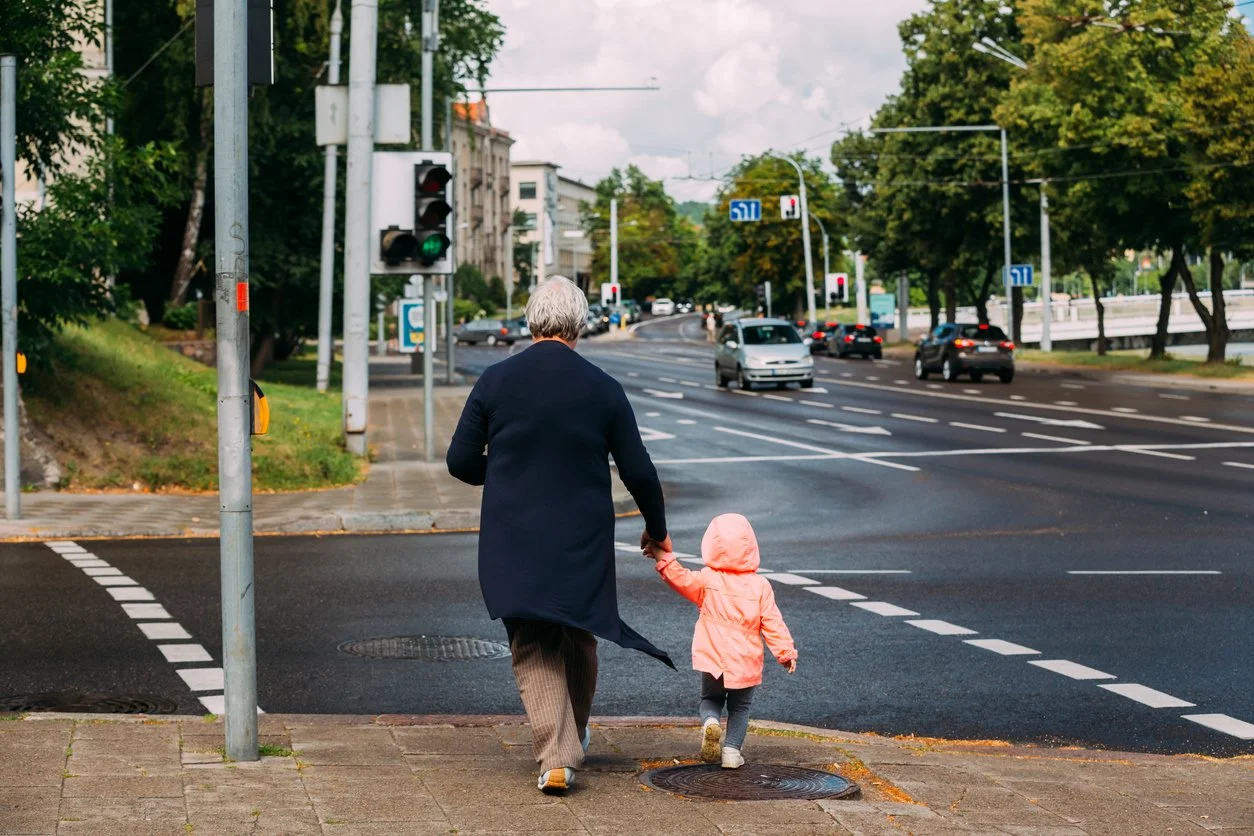
The Vilnius pilot project will be focusing on improving a street in the residential district of Pašilaičiai at the outskirt of the city. Numerous offices, workplaces, a kindergarten, and two schools are located directly at, another school just beyond Medeinos Street which is circulating a dense residential area populated by 10,000 inhabitants. The street’s key challenge is heavy daily congestion near its educational institutions, coupled with a lack of pedestrian crossings and poor road visibility.
-
Within a section of 300 meters, three unsafe pedestrian crossings will be improved. The hilly terrain will require proper infrastructure not only for pedestrians but also for a variety of users, such as people with disabilities or parents with strollers. Critical to the project’s success will be addressing residential parking and the habit of parental taxis to schools in order to find a sustainable solution. Previously there has been extensive dialog between the municipality and residents, however only few of the results have ever been realized – a process that effectively weakened trust. This makes the need for rebuilding this trust into co-creating processes a key task of the project.
-
The intensive co-creation actions in this JUST STREETS project will involve stakeholders from schools, parents, residents, representatives of various institutions, as well as city employees and political representatives.