
Designing Streets in Context: Insights from the first Twin Cities Workshop in Ljubljana
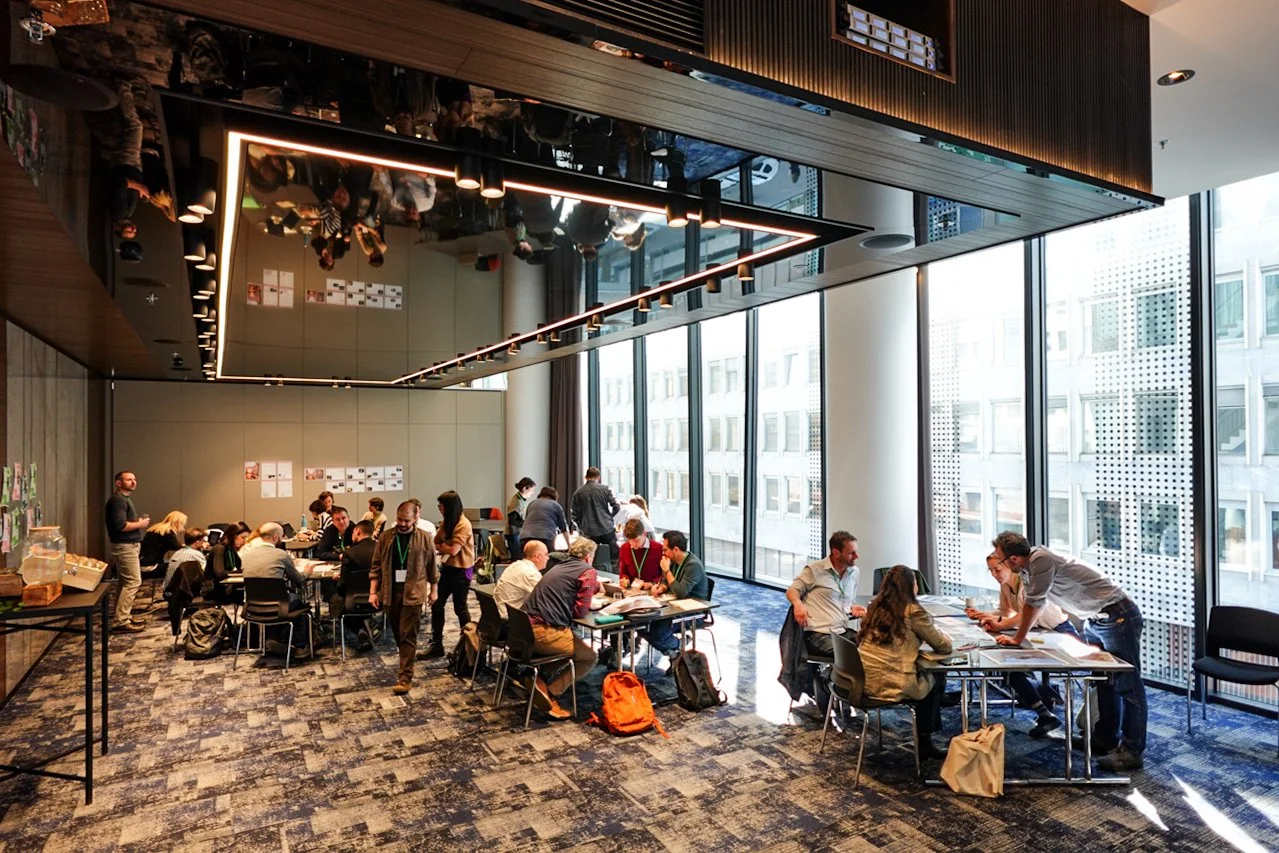
Kick-off of the JUST STREETS Twin Cities workshop in Ljubljana, Slovenia
The first JUST STREETS Twin Cities Workshop, held in Ljubljana in March 2026, brought together participating cities from across the programme to explore how local mobility challenges can be translated into shared principles for street transformation.
One of the interactive sessions, “Designing Streets in Context: Urban Form, Conflict and Active Mobility”, led by Silvia Spolaor from the University of Porto, focused on case studies from five cities in the programme: Lviv, Cascais, Maia, Swansea and Bucharest.
Rather than focusing on isolated design solutions, the workshop explored how cities move from context-specific challenges to more transferable planning principles.
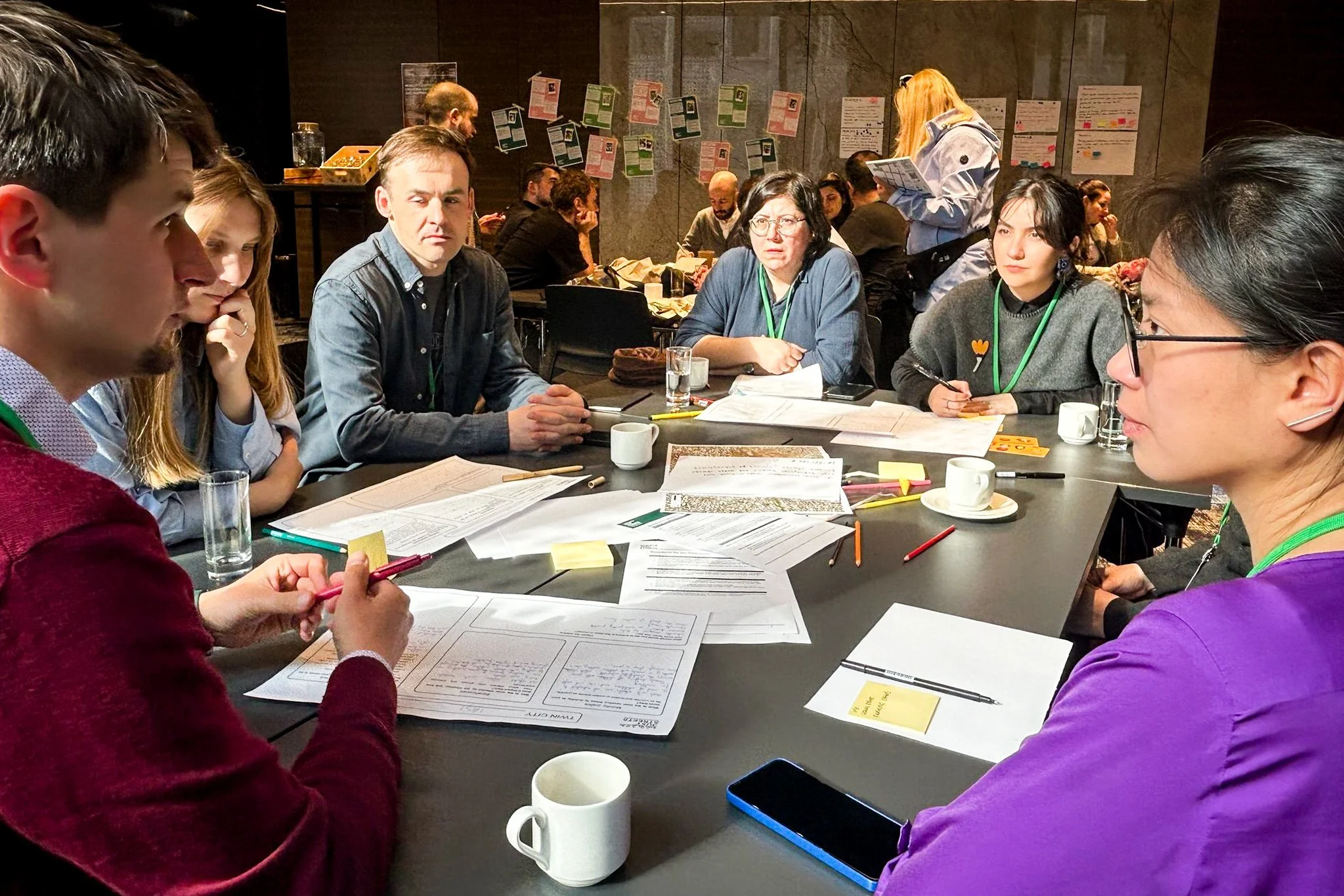
Co-creation exercise focused on local mobility challenges
Shared challenges across cities
Despite different urban contexts, several common tensions emerged:
● balancing reduced car dominance with accessibility and local activity
● improving safety and livability while maintaining mobility flows
● integrating green infrastructure into constrained street environments
● addressing accessibility for diverse user groups.
These recurring challenges highlight that street transformation issues are widely shared, even when spatial and political contexts differ.
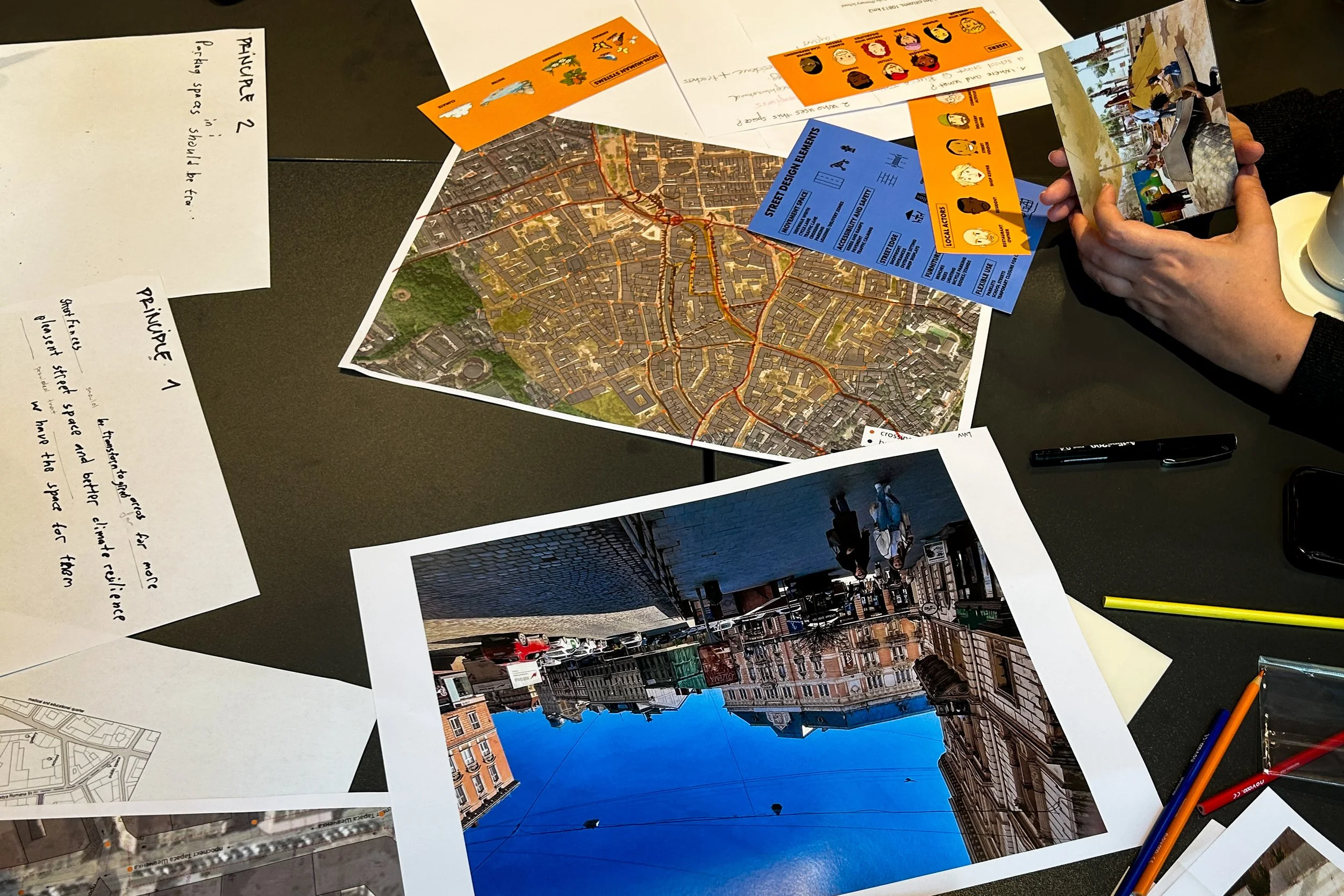
Street transformation challenges are widely shared across contexts.
From ideas to principles
Participants translated design ideas into planning principles, revealing both convergence and divergence.
In Swansea, priorities focused on social, people-oriented streets, with space for rest, play and interaction, combined with reduced traffic speeds and community involvement.
In Cascais, the emphasis was on climate-responsive and multifunctional streets, including green corridors, shaded areas and innovative urban elements adapted to a coastal context.
Across all groups, many principles remained aspirational, reflecting broader strategic directions rather than detailed design guidance - pointing to the challenge of moving from vision to implementation.
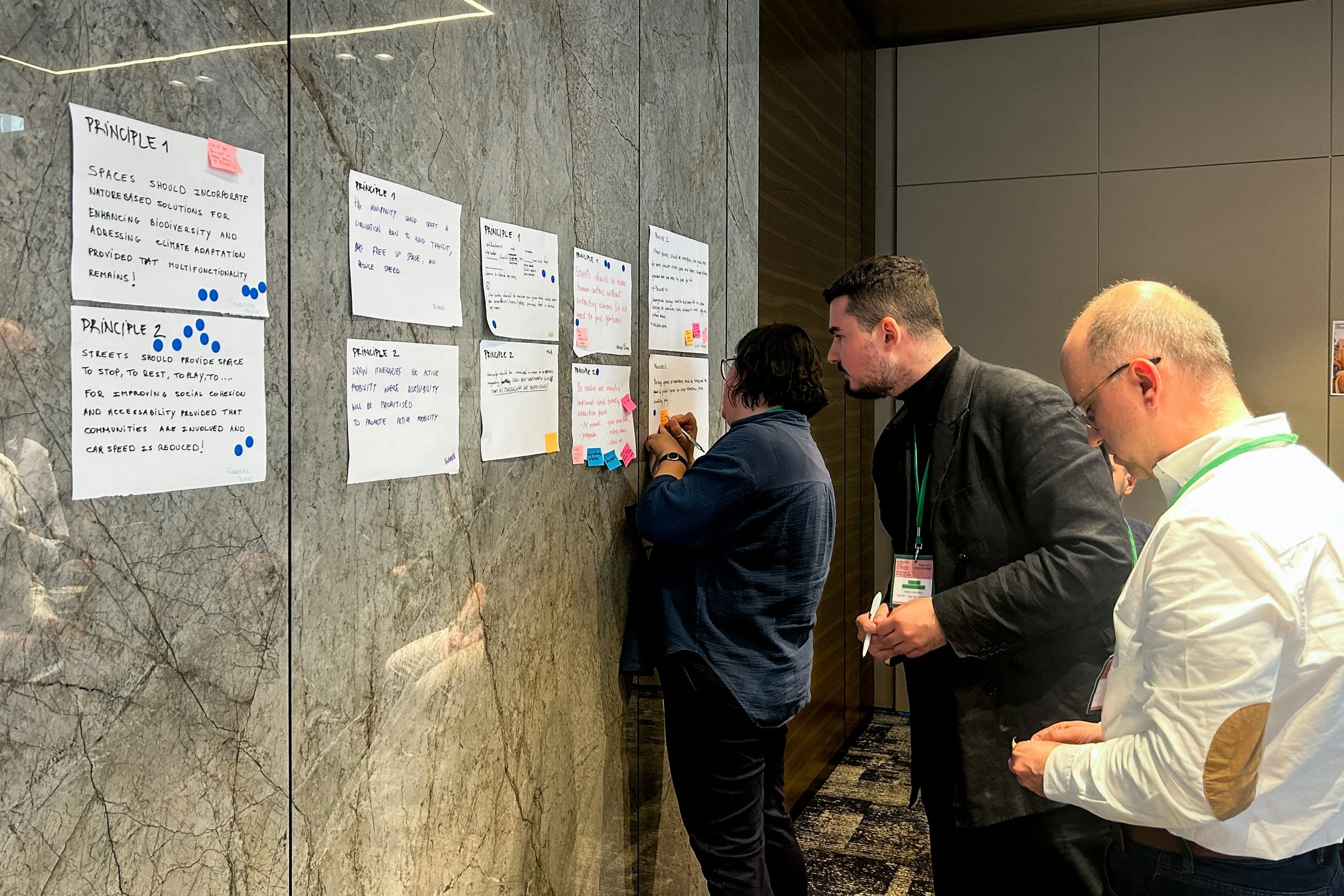
Participants translating design ideas into planning principles for street transformation
Key insights
Three main insights emerged:
Street transformation is highly context-dependent, even when challenges are shared
Translating interventions into principles helps surface trade-offs and priorities
Co-creation formats enable comparison across cities, but require careful framing to balance ambition and feasibility.
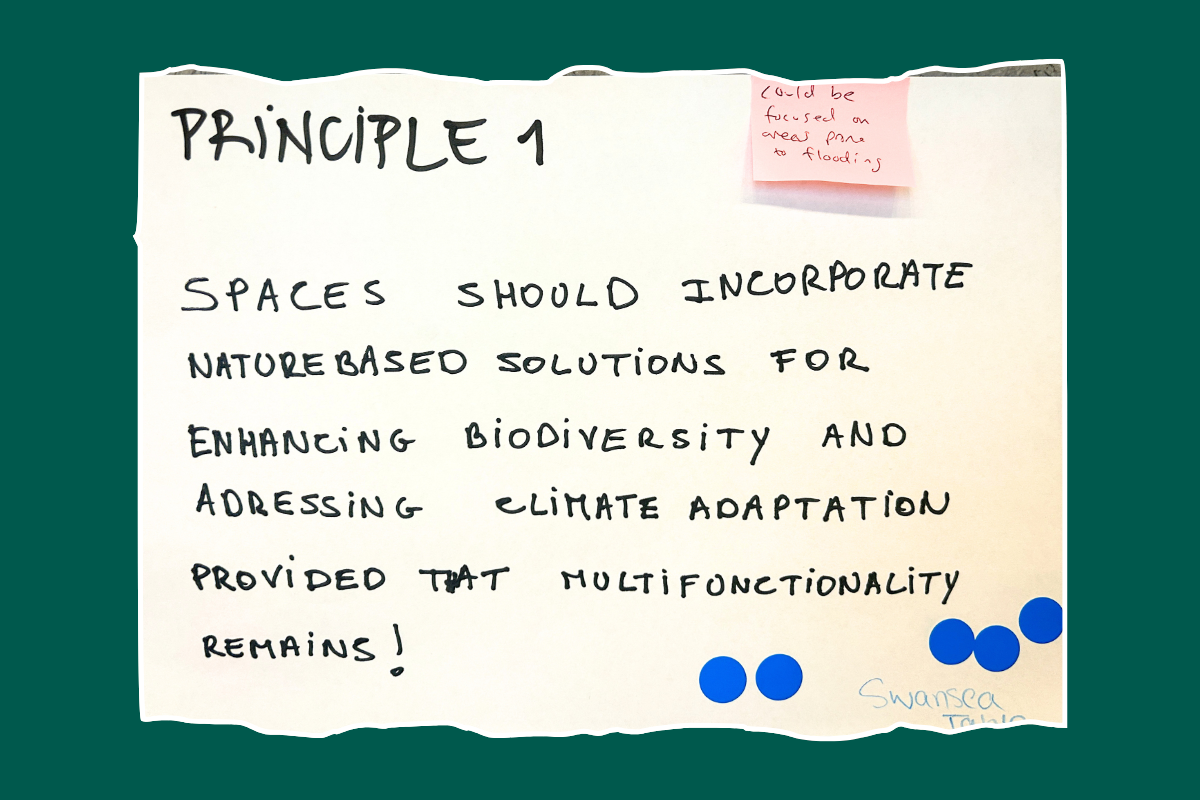
Example of principles developed at the Swansea table
Final word
The Ljubljana workshop confirmed that designing better streets is not about applying universal solutions, but about understanding how shared challenges are interpreted and addressed differently across contexts.
This approach strengthens the JUST STREETS methodology by linking local experimentation with structured learning across cities.
See also: The JUST STREETS Pilot Cities Catalogue
Photos courtesy of Silvia Spolaor