
New JUST STREETS Guidebook Provides Practical Framework for Active Mobility
Streets are political spaces, where policy becomes daily life - and a new guidebook is here to support cities to get it right.
Developed by consortium partner Fondazione LINKS with the contribution of the International Federation of Pedestrians, the guidebook offers policymakers and practitioners a practical, evidence-based framework for designing and communicating behavioural interventions & communication strategies that make active mobility for all.
Published in May 2026, this JUST STREETS output was developed under the CIVITAS Initiative and contributes to the goals of the EU Mission on Climate-Neutral and Smart Cities.
“You don’t convince people who drive their car to work by saying, ‘You’re selfish.’ Instead, invite everyone - including them - to support a system where cycling, walking, and public transit benefit all, even those who continue driving.”
What's Inside?
The guidebook is structured around nine typologies of streets, each addressing specific barriers to active mobility: Happy Streets, No Worry Streets, Comfortable Streets, Community Streets, Inspirational Streets, Informative Streets, Affordable Streets, Welcoming Streets, and Oasis Streets.
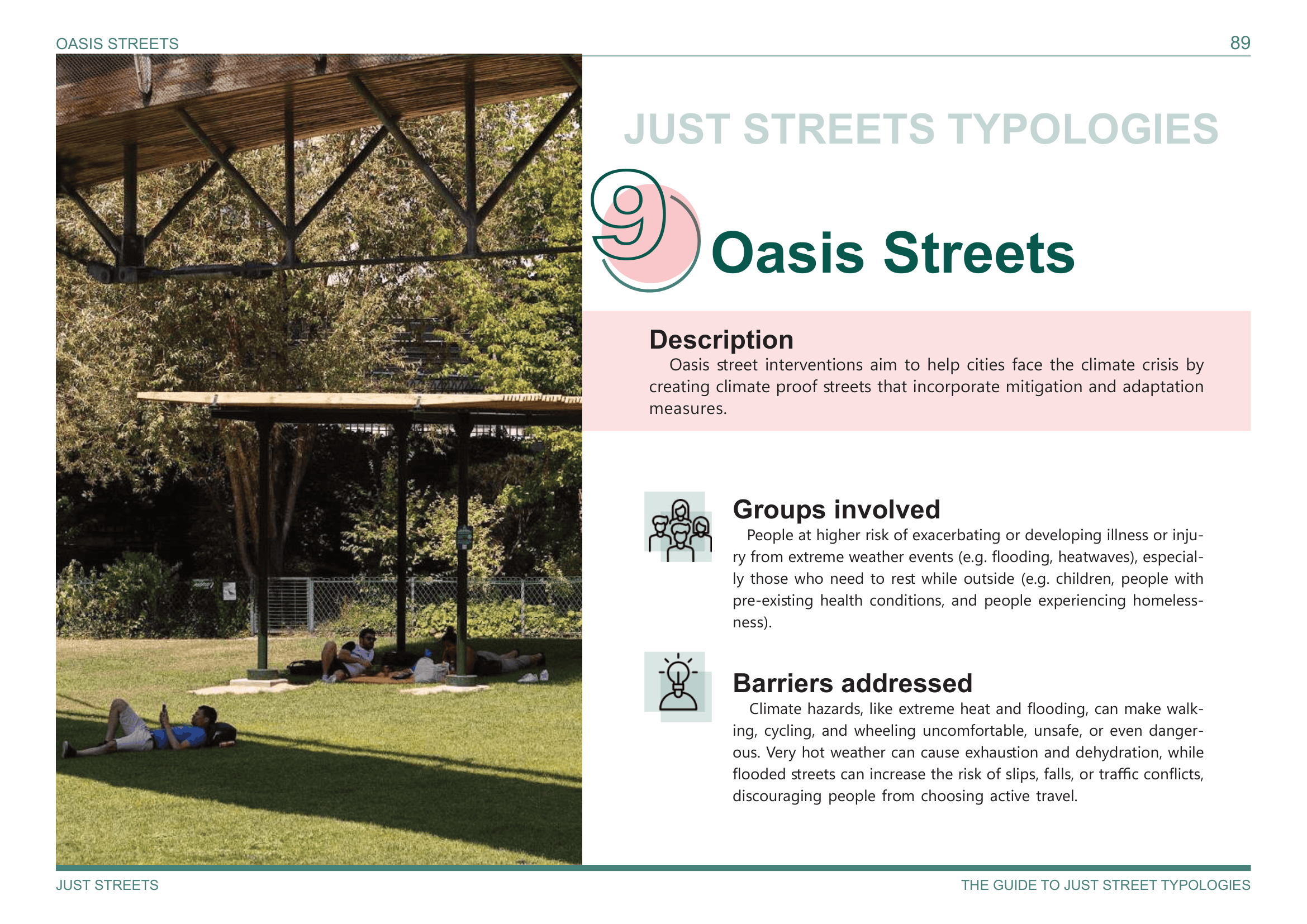
No specific marginalised groups are mentioned in the guidebook - and this is not an omission. This approach aims to avoid reinforcing the harmful impact of labeling can make certain people feel marked as “other”, while still addressing the full spectrum of human capabilities and experiences.
Put simply, just streets are not for “them”; they are for everyone. A city that works for those facing the greatest barriers works better for all.
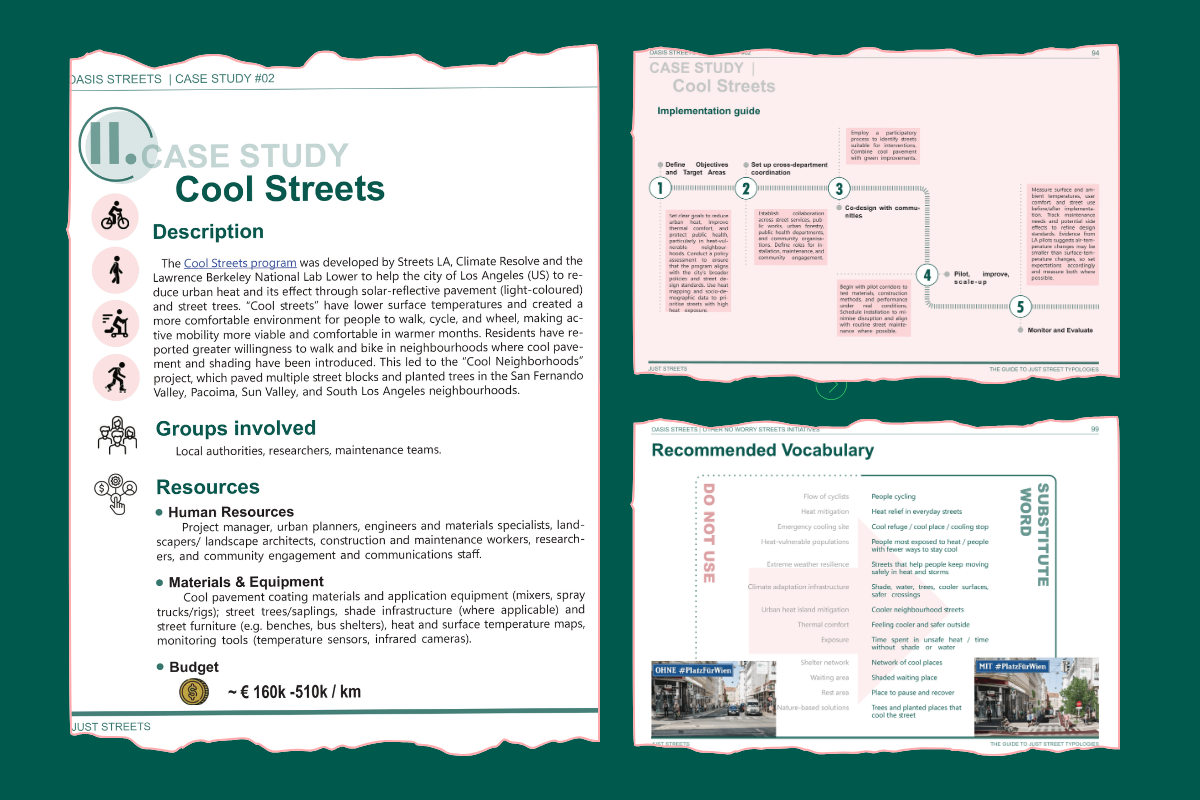
For each street typology, readers will find:
Two real-world case studies of behaviour initiatives from cities across Europe and beyond with implementation guidance (resources, budget ranges, expected impact)
A list of additional behavioural interventions
Communication guidance, including narrative recommendations and alternative terminology.
How Was It Developed?
The guidebook draws on two evidence streams:
Communication strategies: 28 interviews with mobility experts and representatives of marginalised groups across 18 countries
Behavioural strategies: An analysis of 92 street intervention case studies from 22 countries using the COM-B model and the Behaviour Change Wheel.
“When addressing active mobility, it’s not about a particular story; it’s a collective story which has to be in their own language.”
Who Is It For?
The guidebook is intended for city planners, mobility practitioners, policymakers, advocacy organisations, researchers and students - and anyone committed to shift from abstract concepts to implementation.
Download the full publication to explore the nine street typologies and the case studies, interventions, and implementation guidance included in each section.
More on all nine typologies coming soon.