
The final pilot case visit of JUST STREETS took place in the Metropolitan City of Milan from 16 to 18 September 2026. European partners of the project gathered in the city for the occasion. The Municipality of Corsico is one of the project's pilot sites, supported by technical partners Agenzia TPL, Centro Studi PIM, Fondazione LINKS, Politecnico di Torino (PoliTO), RINA Consulting, and SocialFare | Center for Social Innovation, which fulfil the same support role tested in other European contexts.
Among the activities organised to showcase and delve into the pilot case, PoliTO and SocialFare hosted an intensive co-design workshop dedicated to Corsico and its LUM (Urban Mobility Place). It is not just a simple interchange station, but a hub around which services, public transport, and cycling routes revolve.
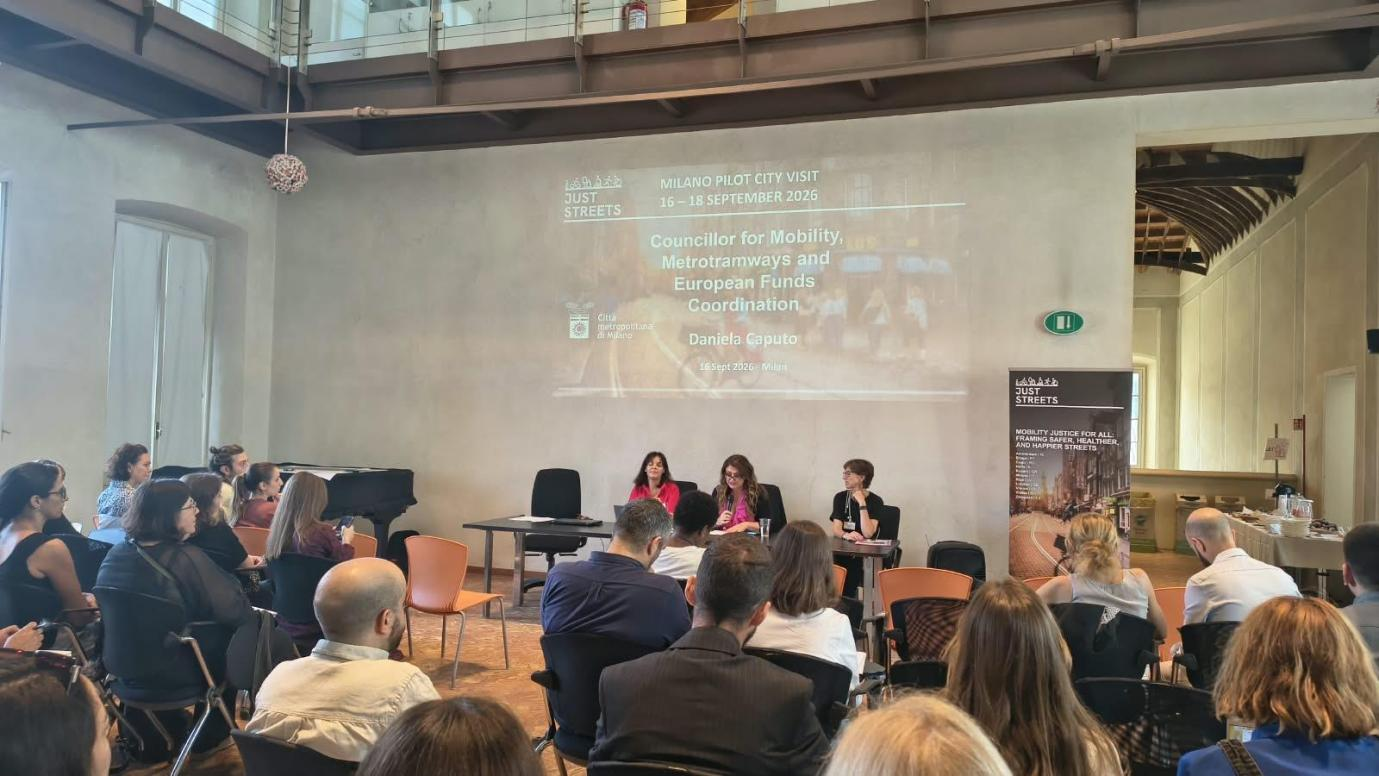
The central question for Corsico is:
What must such a place offer to truly meet the needs of those who pass through it every day, moving beyond its simple function as an interchange node?
During the first day of the site visit, partners were guided on foot through the most representative places of the LUM to gather immediate impressions, and later met with representatives of the local administration.
It was an opportunity to review the progress made so far: in March, through interviews, focus groups, and a co-design workshop, a network of local associations and entities was supported in defining a desired vision for Corsico in 2050, focused on four main areas: mobility and accessibility, public spaces and green areas, economic fabric and services, and urban transformations (for instance, redevelopment of industrial areas).
During the pilot visit, the support team for the Metropolitan City sought to put the technical expertise of the European partners in the JUST STREETS consortium at the service of the Municipality of Corsico. The goal? To translate that vision into a concrete sequence of actions, tools, and regulations needed to bring it to life.
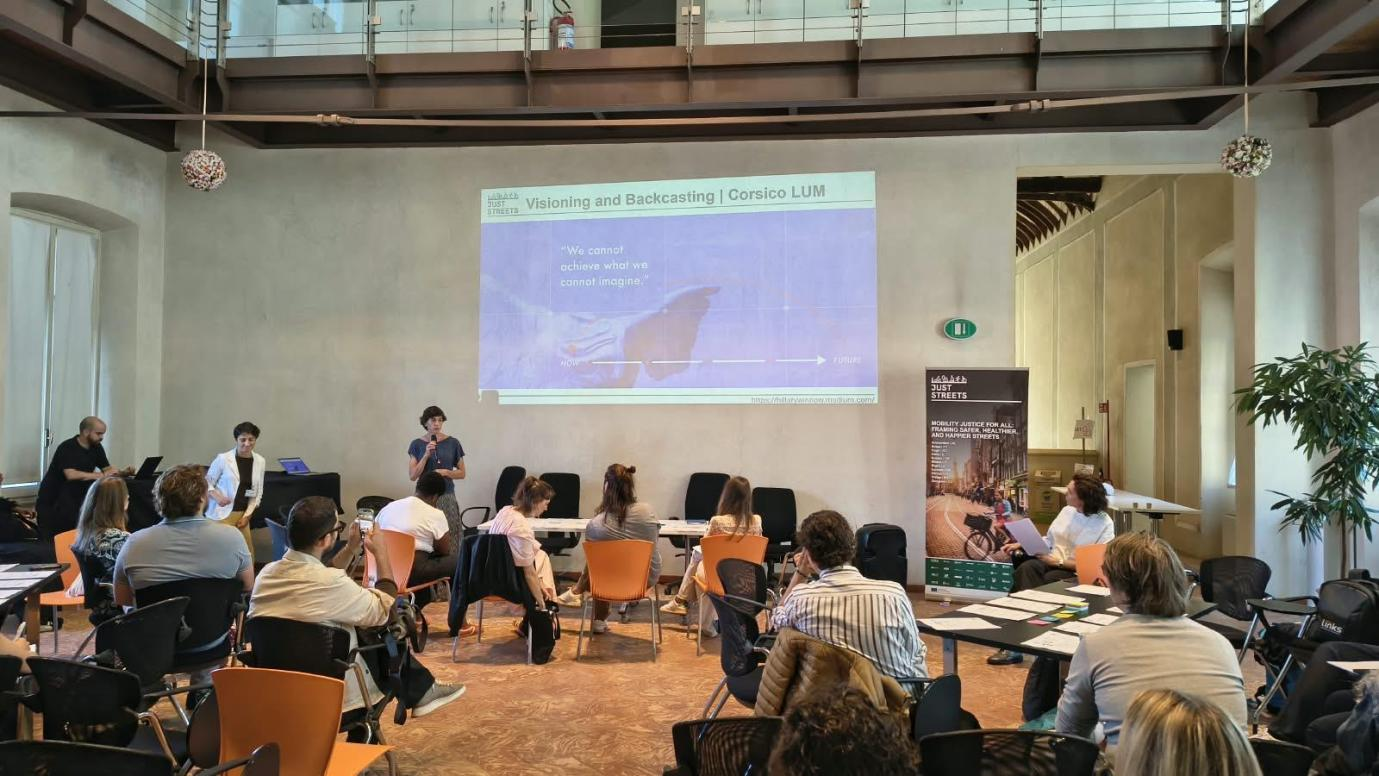
From Future to Present: The Power of Backcasting
With this objective, the following day, Politecnico di Torino (DIST Interuniversity Department of Regional and Urban Studies and Planning) and SocialFare facilitated a workshop structured around the backcasting methodology. Instead of starting from the present, participants project themselves directly into 2050, imagining the vision already realised, and then ask: “Which steps brought us here?”
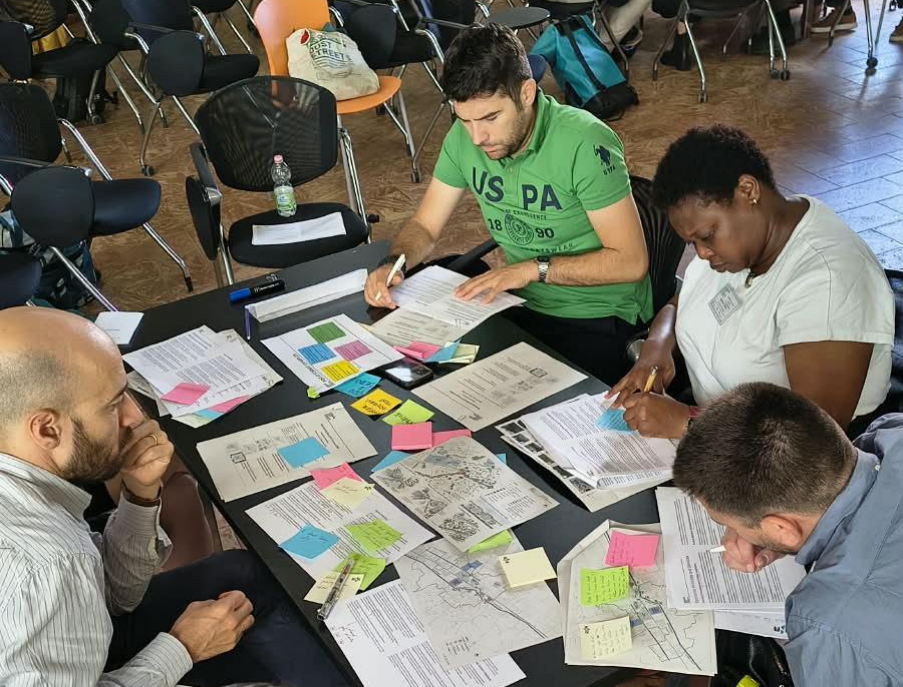
Divided into groups, European delegates worked on different parts of that vision - from active mobility to green spaces, public transport, and local services. They tried to imagine not only what to do, but who should do it and in what sequence, constructing a roadmap together for the next 25 years.
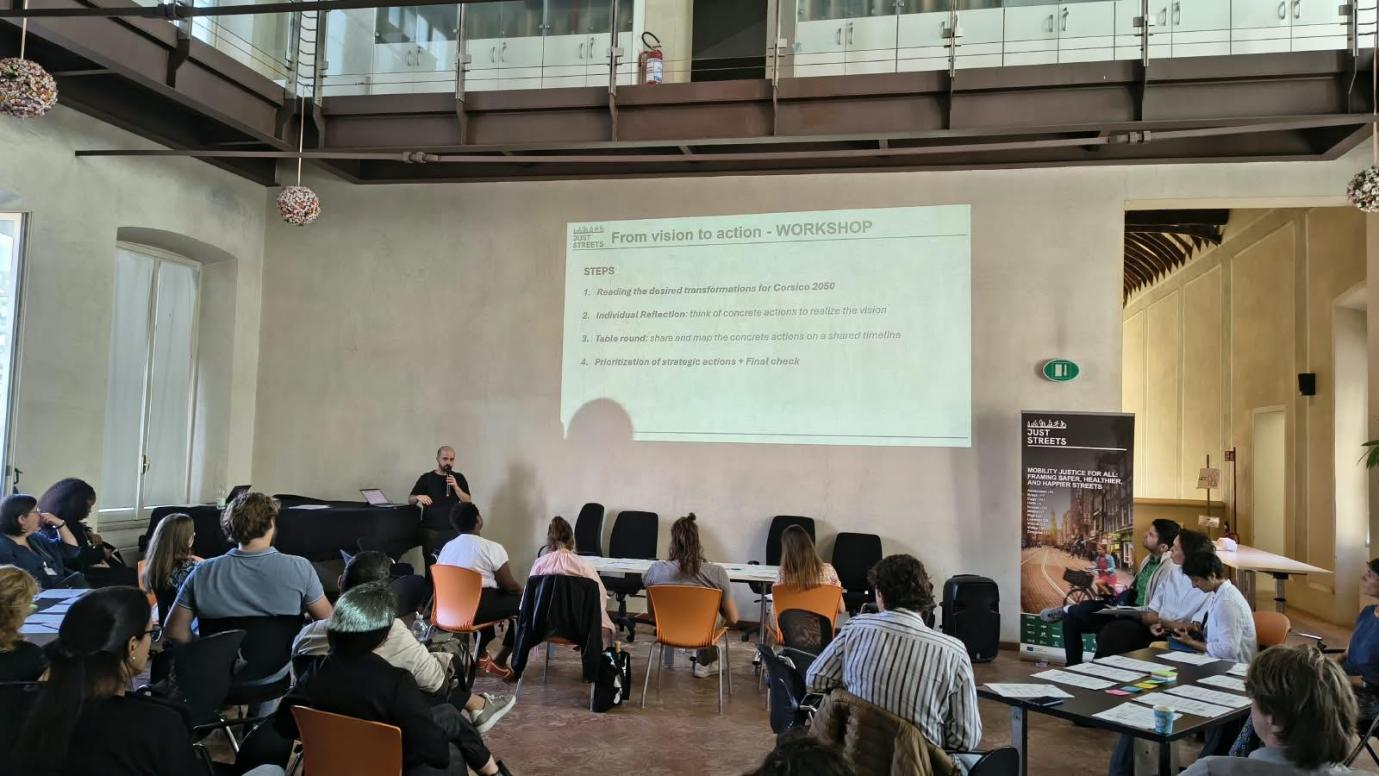
In practical terms, the teams worked on large timeline canvases spanning from 5 to 25 years, populating them step by step with concrete actions.
Ideas were categorised into different types of actions: infrastructure projects, governance measures, engagement and communication, and policy regulations. For each action, relevant stakeholders were identified and key strategic milestones were determined for the Municipality of Corsico to consider when implementing future area transformations.
The backcasting approach turns traditional urban planning on its head. By starting from an ideal future scenario and requiring logical intermediate steps, backcasting helps overcome the complexity of the present.
For an administration, it means turning broad long-term political visions into clear milestones and actionable micro-tasks ready to begin on Monday morning.
Next Steps
The outcomes of these hours of work won't remain on the table.
Politecnico di Torino and SocialFare are now refining this roadmap to deliver it to the Municipality of Corsico, equipping them not just with good ideas, but with an operational action plan to reconnect the station to its urban environment.
The Metropolitan City of Milan views this process as a model to learn from for the other 44 mobility hubs in its territory.
JUST STREETS partners will also be able to draw inspiration from this experience to test the backcasting method locally.
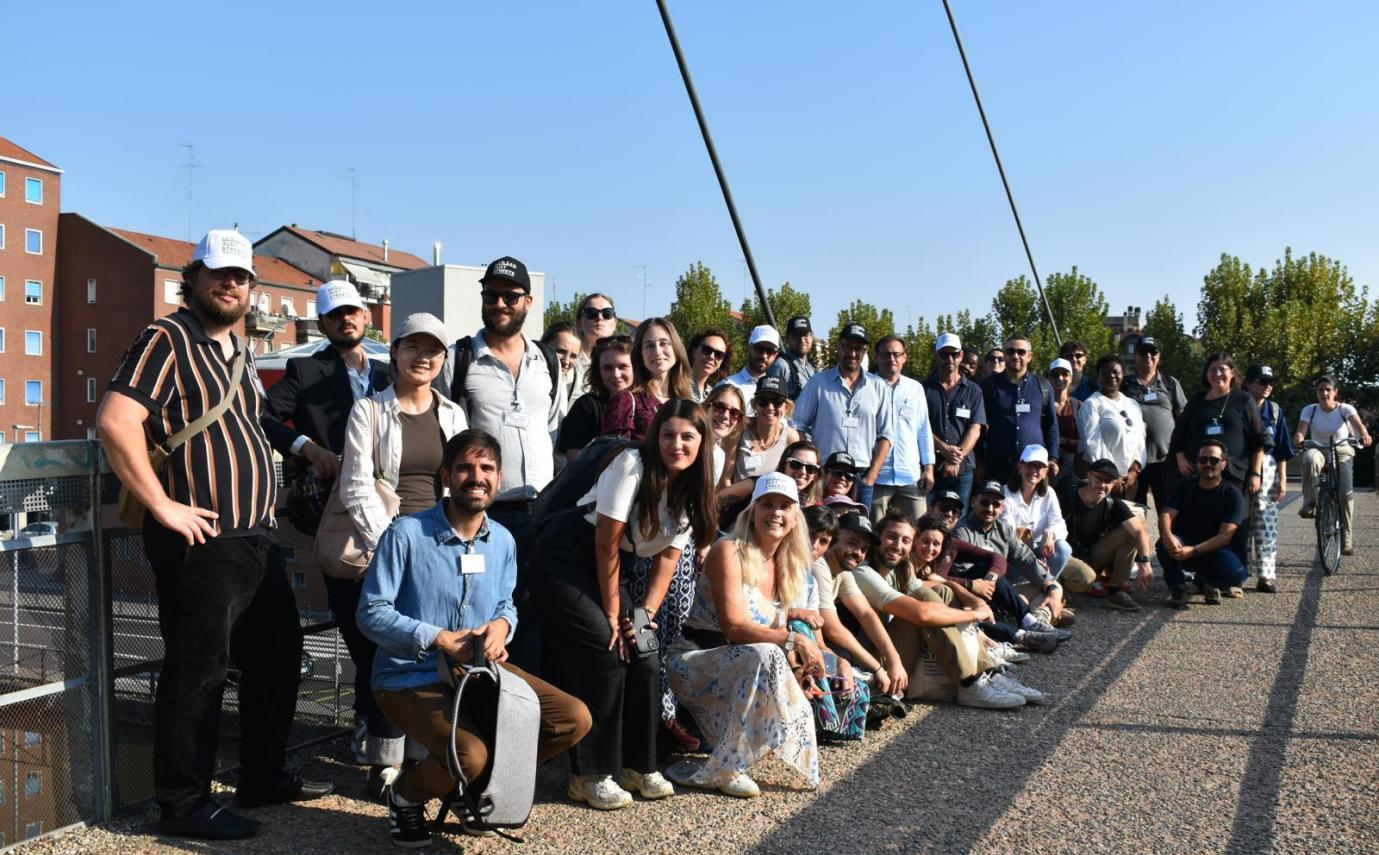
JUST STREETS – Mobility Justice for All: Framing Safer, Healthier and Happier Streets is a European project supported by a joint team of technical partners. Together, Agenzia TPL, Centro Studi PIM, Fondazione LINKS, Politecnico di Torino, RINA Consulting, and SocialFare work closely with the Municipality of Corsico on its pilot case within the framework of the Metropolitan City of Milan.