
What Students Saw When They Looked Closely at a London Street
For a week in June 2026, students from the University of Westminster and Texas State University engaged with real-world street transformation and mobility justice challenges across London through site visits, workshops, discussions and collaborative projects.
From 22–26 June, the JUST STREETS Summer School brought students into the field in Lambeth, where they examined streets and public spaces, evaluated existing conditions, developed proposals and presented their work to university staff and external guests.
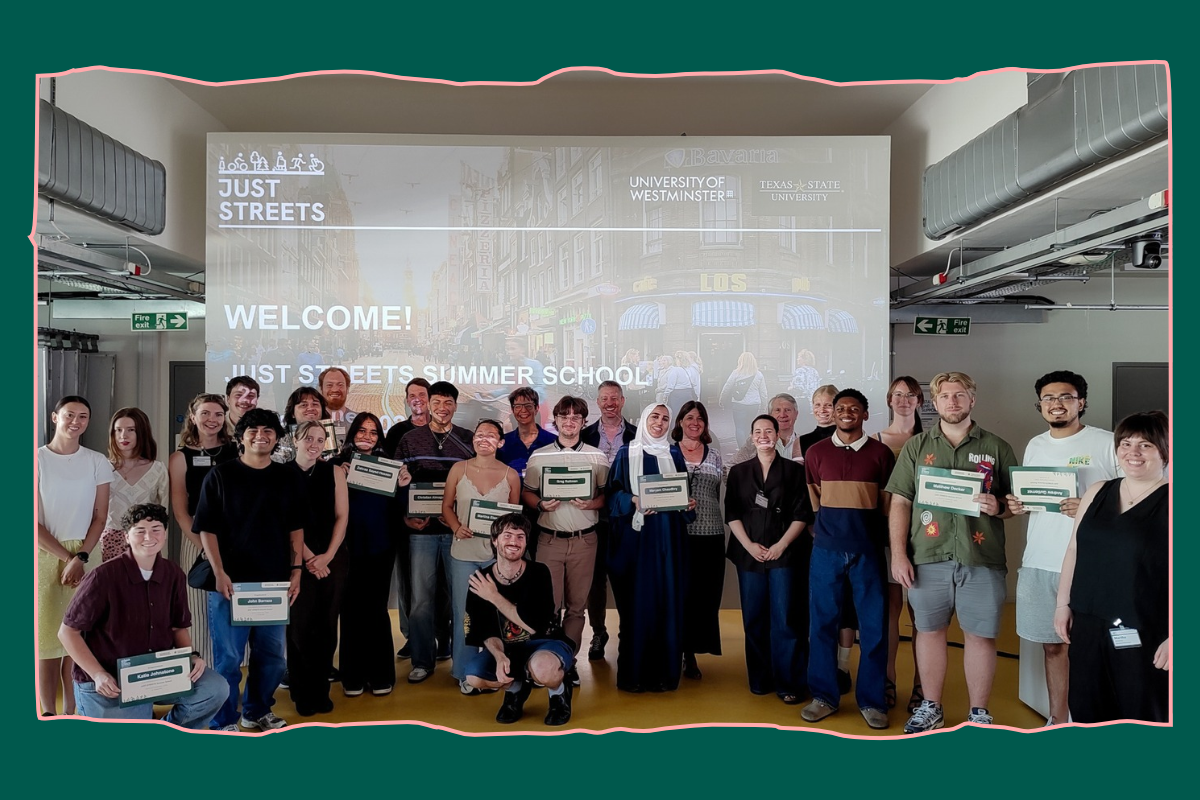
Students and tutors from the JUST STREETS Summer School, bringing together the University of Westminster and Texas State University in London.
Reading the Street
The programme began with an introduction to Hercules Road, The Cut and Lower Marsh in the Waterloo area.
The students also visited St Mark’s Primary School at Kennington Oval, where they were introduced to Lambeth’s School Streets and Healthy Neighbourhoods programmes.
The programme then moved into evaluation and project work. Each team worked on a specific site, returning to it during the week to carry out evaluations and develop its proposal. Students used the Healthy Streets Evaluation Tool and completed their adaptation urbanism and SIT tool evaluations.
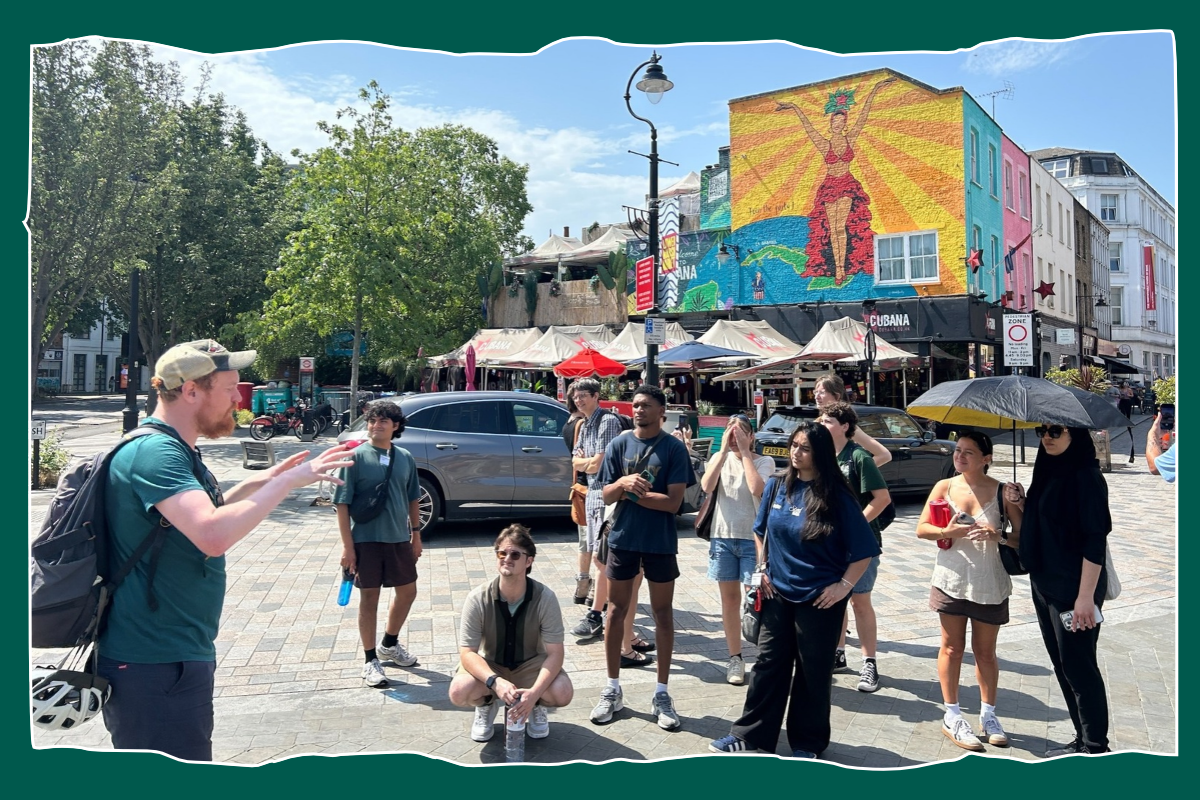
Students carried out site visits in Lambeth, examining streets and public spaces as part of their project work.
From Observations to Proposals
The teams spent Wednesday and Thursday developing their projects before presenting them on Friday at the University of Westminster.
Across the projects, proposed interventions focused on introducing more nature into the public realm to improve comfort, biodiversity, climate resilience and flood management.
The presentations also focused on greener, safer, better-connected and more people-focused urban environments. Common themes included prioritising pedestrians and active travel, improving connectivity and wayfinding, and enhancing placemaking and local identity.
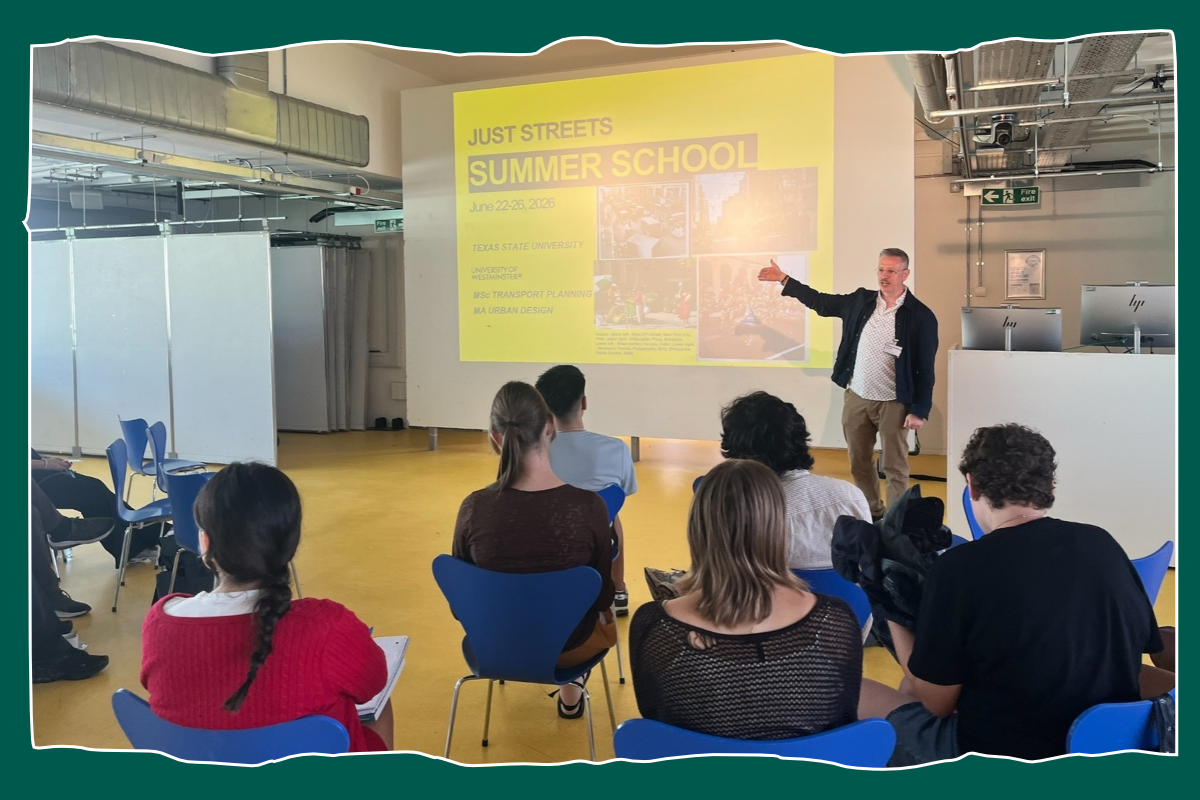
Throughout the week, students worked in teams to evaluate their sites and develop proposals for street transformation.
From the Jury
“I’m amazed by how much they’ve taken the concept of JUST STREETS and made it their own. What we liked about all of the presentations was that the proposals weren’t just interesting, fun and ambitious. You could actually see them being implemented. They weren’t ideas for some far-off future – they were realistic proposals, from tree canopy to improving walkways.”
Luuk Van Kessel, Principal Transport Planner, London Borough of Lambeth
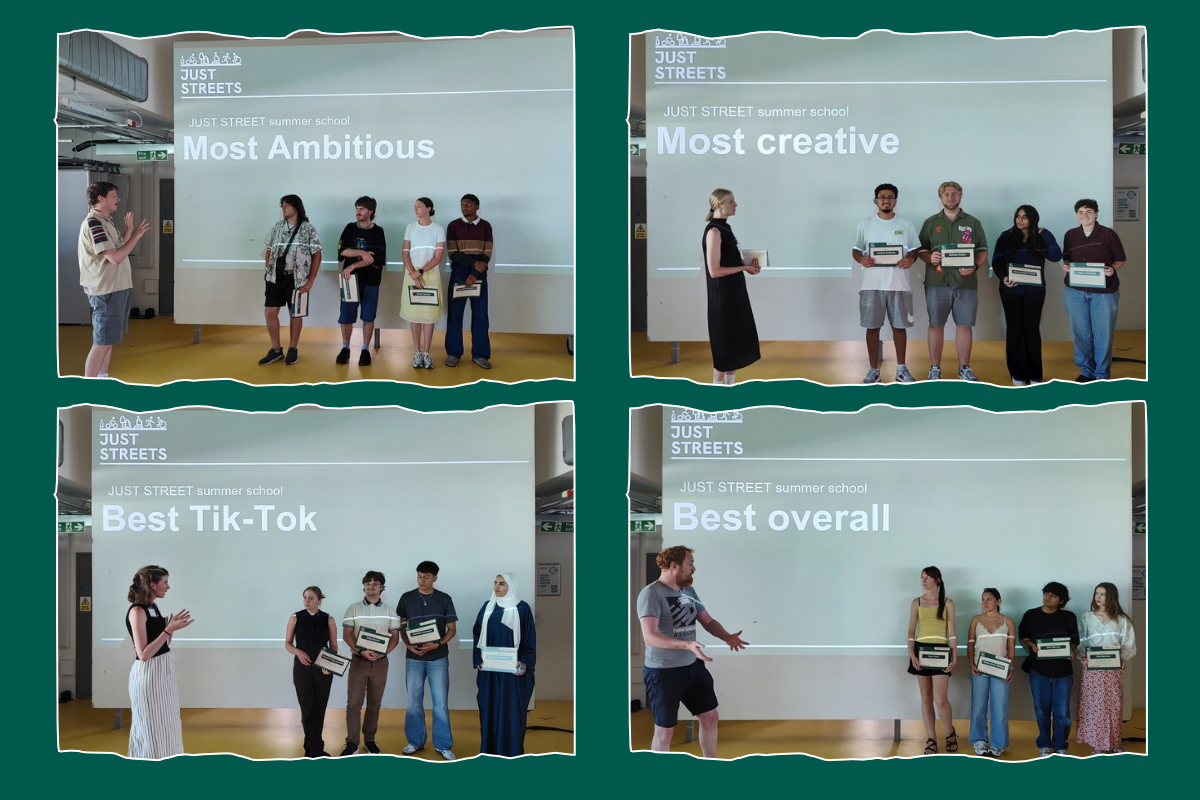
Students’ final presentations were recognised across four categories: Most Ambitious, Most Creative, Best TikTok, and Best Overall.
The Winning Team: Hunkules
The winning team, Hunkules, worked on Hercules Road.
The team identified several challenges on the street, including litter and dog waste, community gathering spaces, cycling infrastructure and the quality of the public realm beneath the railway arches. They also identified safety concerns where cycling and vehicle traffic interact.
The team carried out community engagement with local residents and maintenance volunteers. This highlighted a desire for more greenery, improved waste facilities, increased community activity and enhanced public spaces.
Their proposal brought these ideas together through three areas of intervention:
Placemaking
Play areas, seating, picnic spaces, public art, heritage markers and better lighting, alongside connections between local businesses, public spaces and community activities.Blue-Green Infrastructure
Planting, green walls, water fountains, improved waste facilities and environmental enhancements within the railway tunnel area, together with strategies to reduce pollution impacts and improve biodiversity.Vision Zero Road Safety Measures
Protected cycling routes, pedestrian crossings, bike parking and traffic-calming measures aimed at reducing conflicts between vehicles, cyclists and pedestrians.
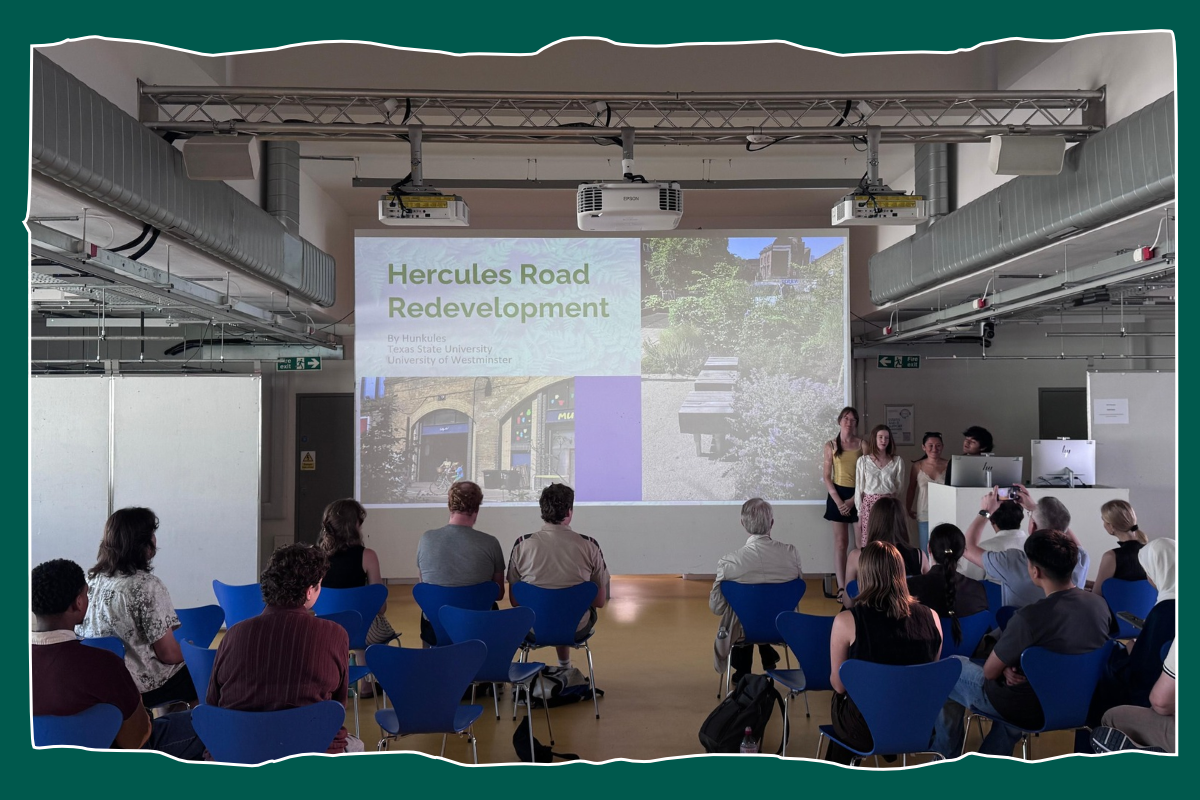
Team Hunkules presents its proposal for Hercules Road during the final presentations.
In Their Own Words
“The most important thing that we learned from this project was the importance of collaborating with the community. As planners, we may have a lot of knowledge as to the type of design that we want to do, but we also realised that we aren't living in these spaces every single day. We need to know how they interact with these spaces and what they truly want.”
The importance of that approach became clear when the team spoke with a local resident during their work on site:
“We spoke with a local resident on site, and she transformed our ideas for this place. We had a certain idea going into it, and then we spoke with her, and we reevaluated what our priorities were. What’s really important?”
What the Students Saw
So, what did the students see when they looked closely at a London street?
On Hercules Road, they found a combination of issues that were closely connected: litter and dog waste, the quality of public space beneath the railway arches, opportunities for community activity, cycling infrastructure and conflicts between cyclists and vehicles.
Their response was not a single intervention. The winning Hunkules proposal brought placemaking, blue-green infrastructure and Vision Zero road safety measures together, alongside ideas for more greenery, better waste facilities, increased community activity and improved public spaces.
The experience showed how looking closely at a particular street can reveal connections between issues that might otherwise be considered separately – and how different interventions can be brought together in response.
For JUST STREETS, this is part of putting street justice into practice: understanding the conditions of a particular place, listening to the people who use it, and developing changes that respond to different needs at the same time.
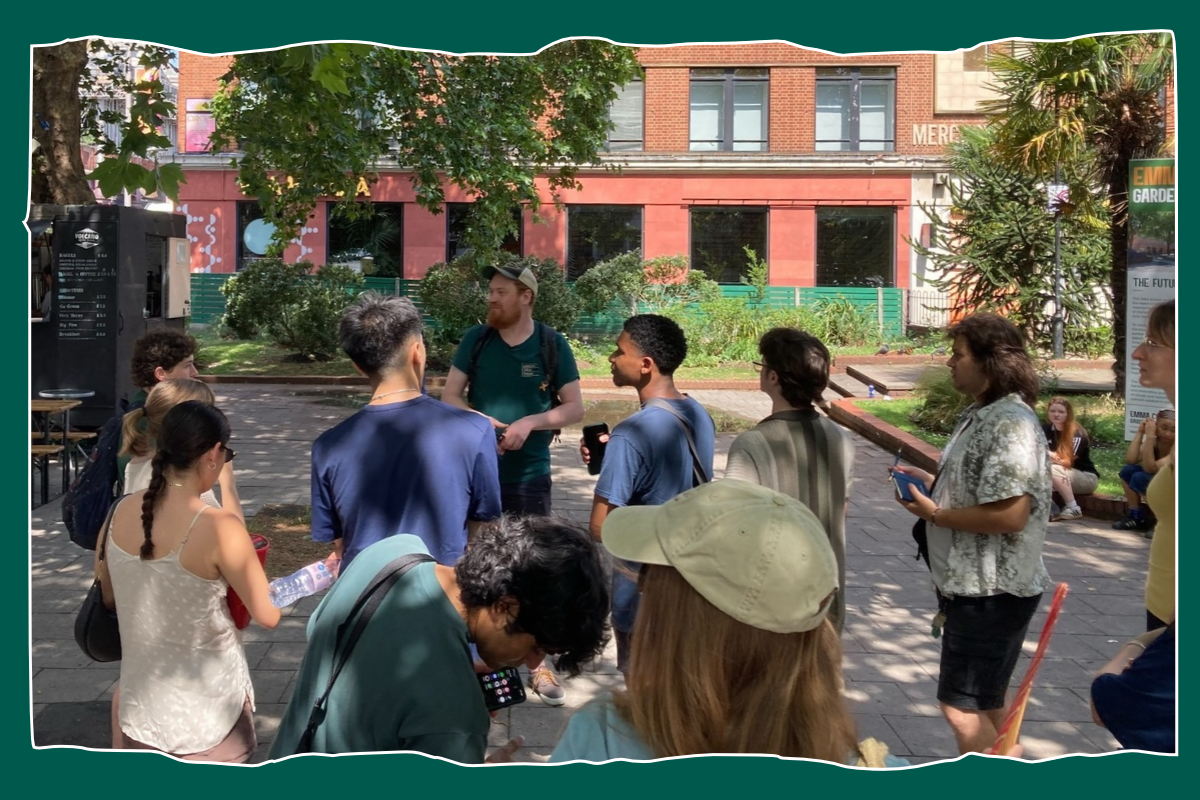
The students saw first-hand what it means to put street justice into practice — connecting people, place, and the changes streets need.