
From Data to Transformation: Insights from Our Pilot City Visit to Cugir, Romania
How do we turn underused cycling lanes, car-dominated streets and unsafe school environments into places where people actually want to walk, cycle, and spend time?
This question was at the heart of the JUST STREETS pilot visit to Romania in June 2026, where several project partners visited our technical partner, the Technical University of Cluj-Napoca (UTCN), and our pilot city Cugir.
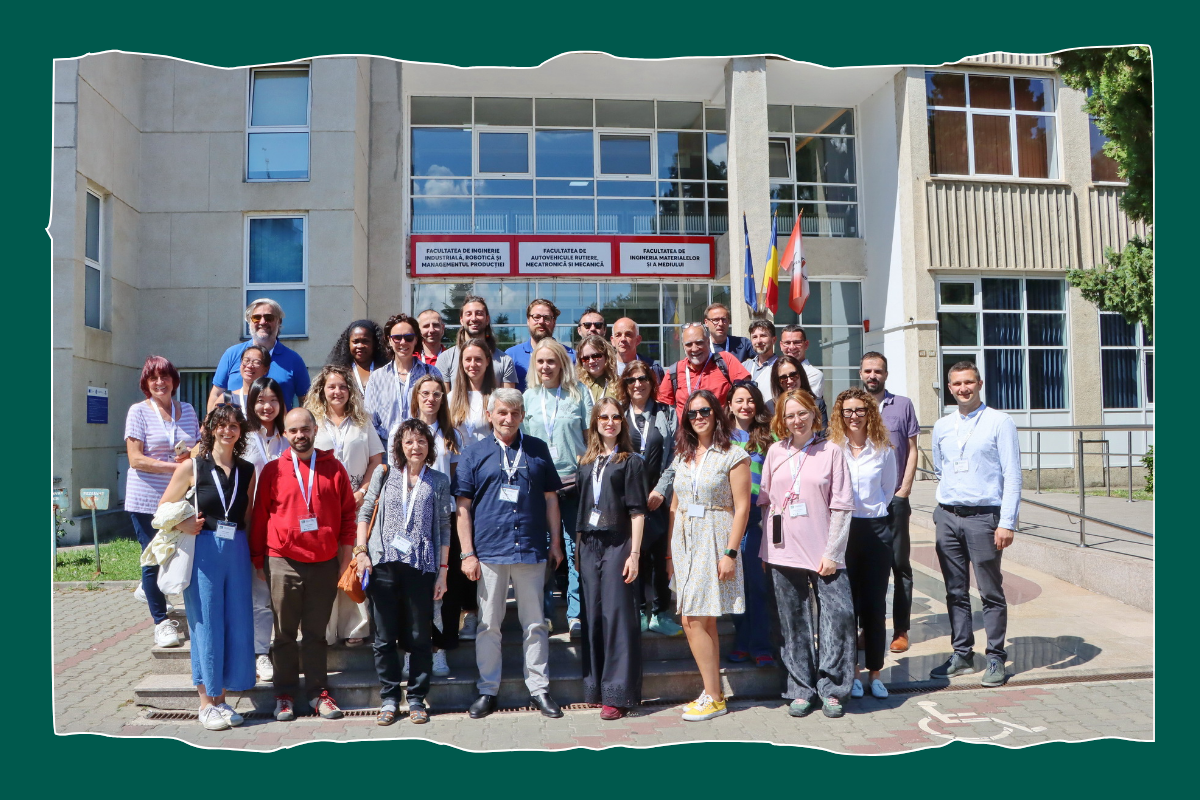
JUST STREETS partners at the Technical University of Cluj-Napoca during the visit to Cugir.
The visit offered a powerful combination of technical insight and real-world transformation: from analysing traffic speeds and mobility patterns to observing how street interventions are already changing everyday behaviour.
Better Streets Start with Better Data
At UTCN, partners gained deeper insight into how traffic and mobility data are measured and analysed in real urban environments.
Using a range of technical tools, the team demonstrated how traffic speed, mode split and movement patterns of pedestrians, cyclists, cars, and buses can be captured and evaluated. These measurements provide critical evidence for understanding how streets function - and where interventions can improve safety, accessibility and quality of life.
The visit also sparked valuable discussions around different traffic-calming approaches currently being assessed within JUST STREETS. Early findings underline an important lesson: data alone rarely gives simple answers.
Measuring, interpreting, and debating evidence from different perspectives remains essential for better decision-making.
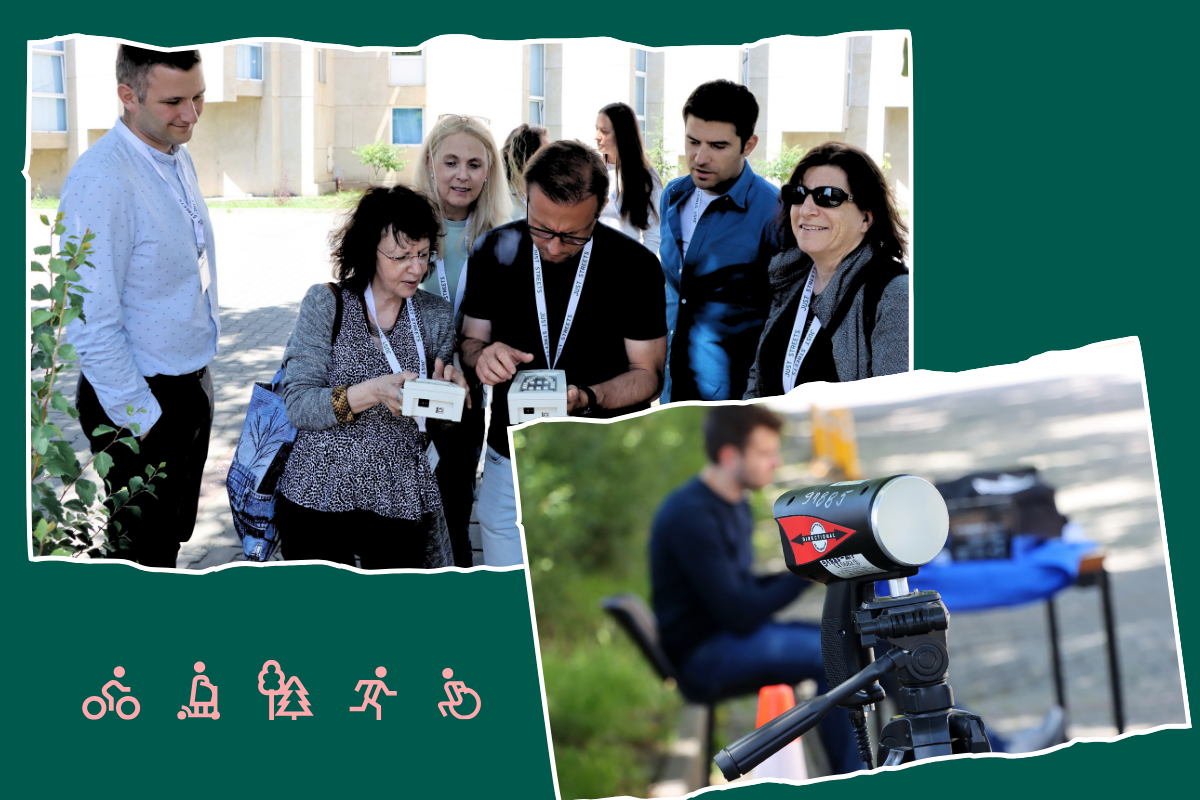
Using a range of technical tools, traffic and mobility data are measured and analysed to support safer, more accessible streets.
Cugir: From Car-Oriented Spaces to People-Friendly Streets
What stands out most in Cugir is how much has changed in just two years.
Step by step, the city has moved from largely underused cycling infrastructure and car-oriented public space toward streets and places that feel more vibrant, more active, and more welcoming for people.
This transformation is strongly driven by a mayor who has made sustainable mobility a clear priority and places deep trust in his highly committed local team. That trust has enabled the team to work with persistence, creativity, and remarkable dedication on the ground.
What makes Cugir particularly inspiring is not only the physical transformation of streets, but the social transformation happening alongside it.
Through continuous dialogue, direct engagement in public space and patient trust-building, the local team has gradually turned more and more residents into co-creators of change: people from different age groups and social backgrounds are increasingly embracing and supporting a more active and sustainable lifestyle.
This transformation is closely connected to Cugir's ambition as part of UNESCO's Global Network of Learning Cities. Being a learning city means continuously exploring how sustainable mobility can become part of everyday life - not as an abstract policy ambition, but as lived practice.
A great example is Green Day (Ziua Verde), a monthly initiative that brings together the municipality, local associations and community groups to offer sustainable, inclusive, and family-friendly activities. Free public buses and the city bike system help residents experience alternative ways of moving through the city.
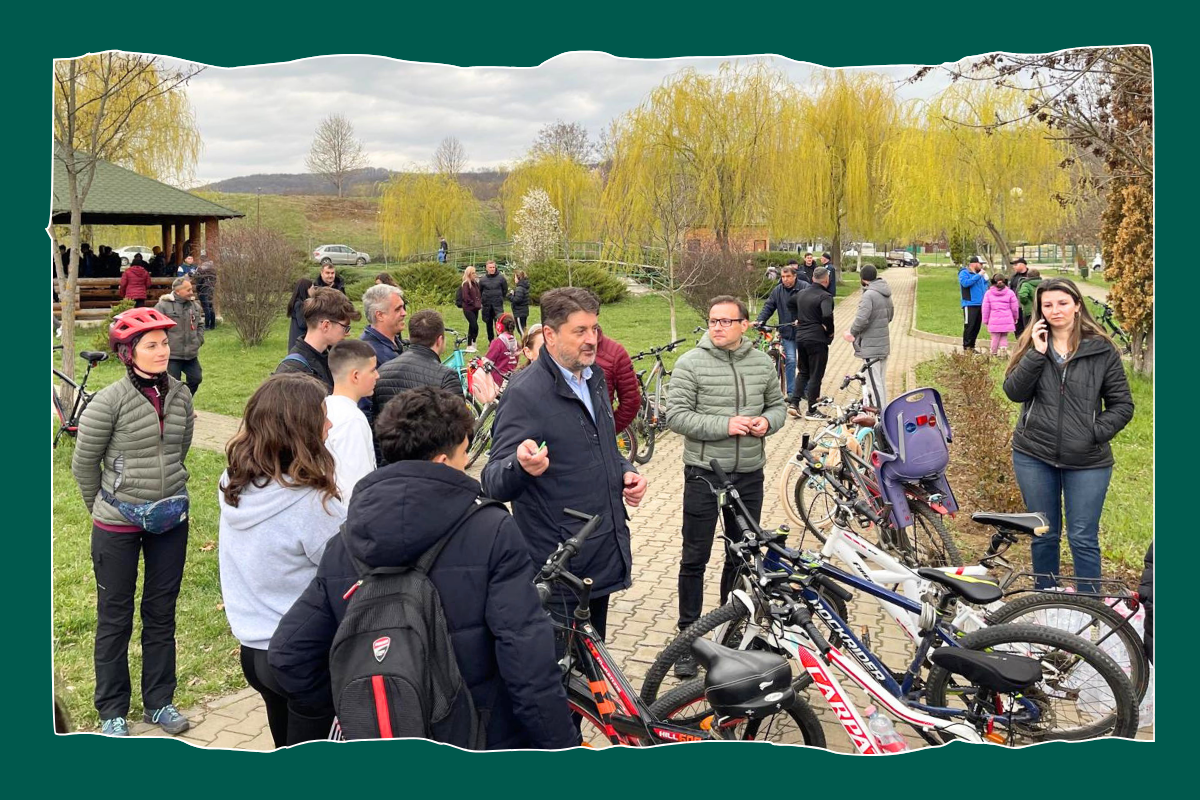
The monthly Green Day (Ziua Verde) encourages residents to experience more sustainable ways of moving through the city.
Romania's First Permanent School Street
One of the strongest examples of change can be seen at Singidava School, home to Romania's first permanent school street.
When the idea was first introduced, the school director's reaction was simple: "Just wow." That enthusiasm is now visible in daily routines.
Compared to a few months ago, more children already walk or bike to school independently. Behaviour is changing - not through awareness campaigns alone, but because the surrounding environment now supports safer and healthier choices.
“It’s Give and Take”
One story particularly captured this shift: children who want to join the school's football club or cheerleading team are encouraged to commit to coming to school on foot or by bike. As one teacher put it: "It's give and take."
That simple phrase captures a central insight of JUST STREETS: meaningful transformation happens when infrastructure, behaviour, and community evolve together.
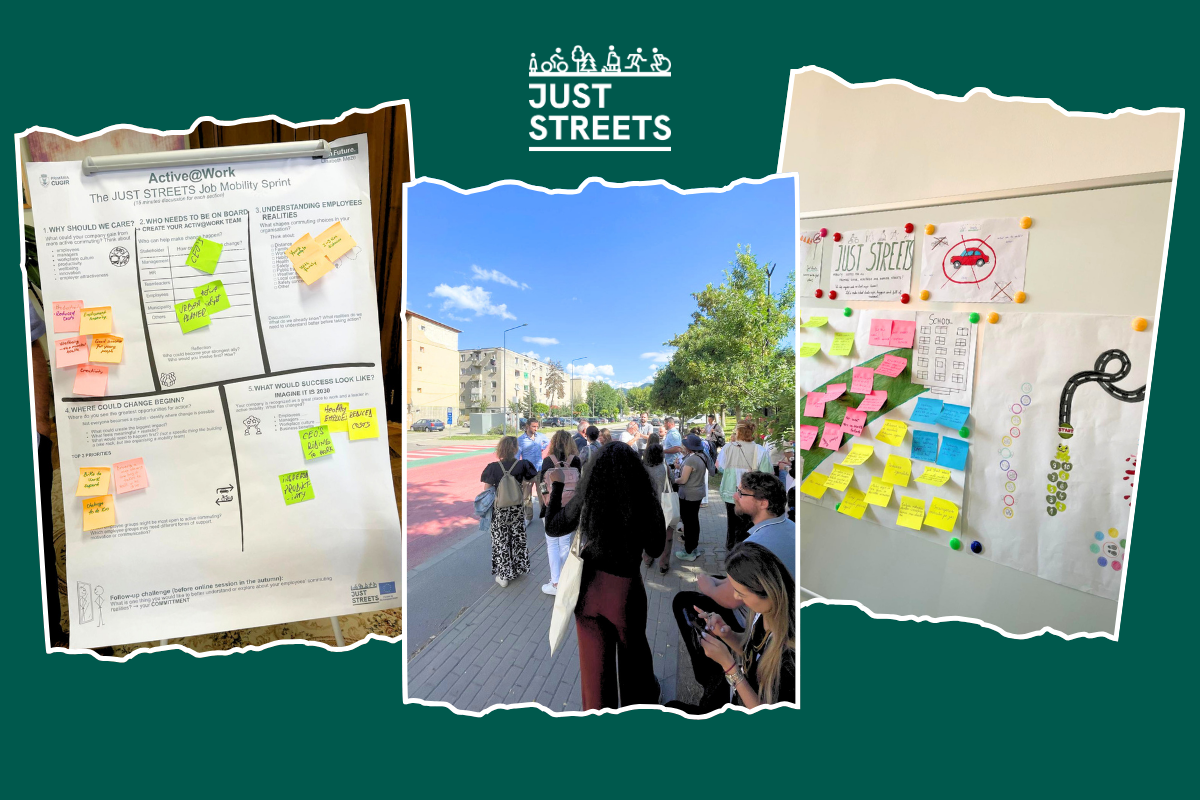
Exploring Cugir's streets and taking part in the Job Mobility Sprint, partners reflected on commuting realities and practical ways to encourage more active mobility.
The Main Takeaway
The pilot visit in Romania showed once again that transforming streets is not just about redesigning physical space. It is about creating the right conditions for people to move differently, behave differently, and ultimately live better together.